
هر کسی کو دور ماند از اصل خویش
باز جوید روزگار وصل خویش
“Whoever is left far from their source seeks again the time of union.” Rumi, the Masnavi
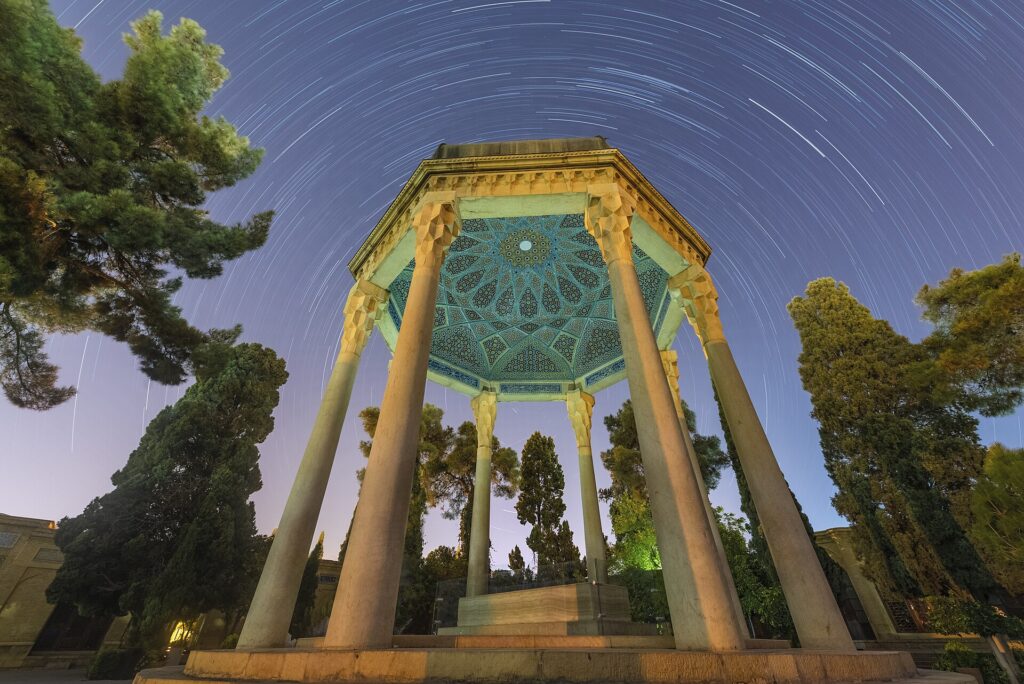
In Iran, poetry is not kept on a high shelf. People quote Hafez in an argument, finish each other’s lines of Saadi at dinner, and open the Divan when a decision is hard. Grandparents who never studied literature can recite pages of Ferdowsi. For a family far from home, a single verse can carry a whole country.
That is why poetry sits at the heart of Virtual Pardis. This is a place to read the great poets together, learn how the poems work, share the verses your family loves, and keep the gatherings alive: the poetry nights, the games and the readings that have always been part of Persian life.
Start with two masters
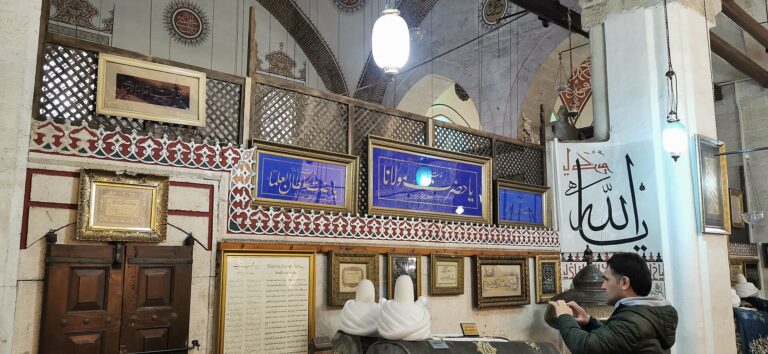
Rumi
The mystic of the reed flute and the whirling dervishes. The Masnavi, the Divan-e Shams, and why the world fell in love with him.
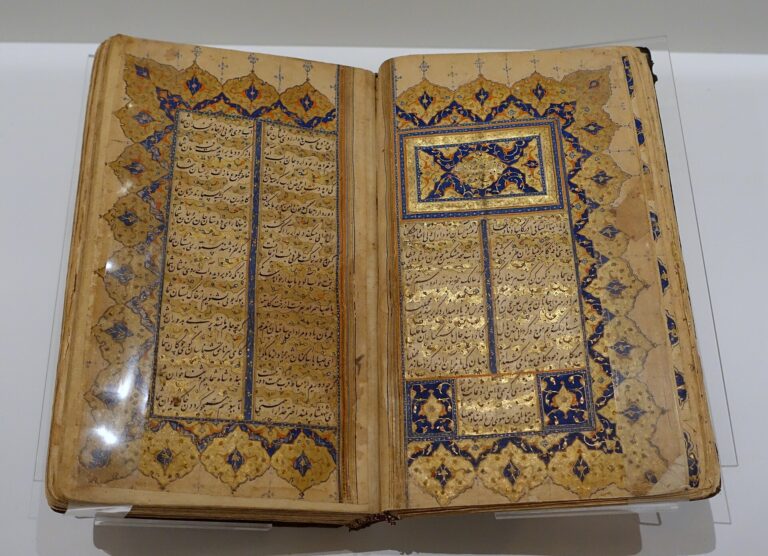
Hafez
The Tongue of the Unseen. The ghazals of love, wine and hypocrisy, and the fal that families still open on Yalda night.
The great poets
A thousand years of Persian poetry, from the first court poets to the modern masters. Each page has their story, a verse in Persian with an English reading, and where they rest.
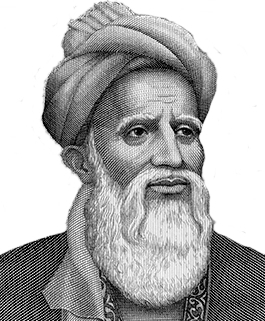
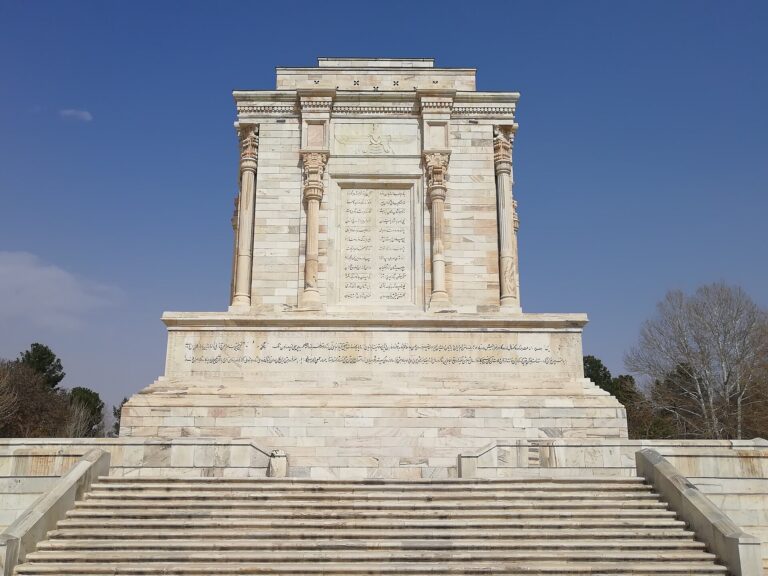
Ferdowsi
Thirty years on the Shahnameh, the Book of Kings, to save the Persian language.
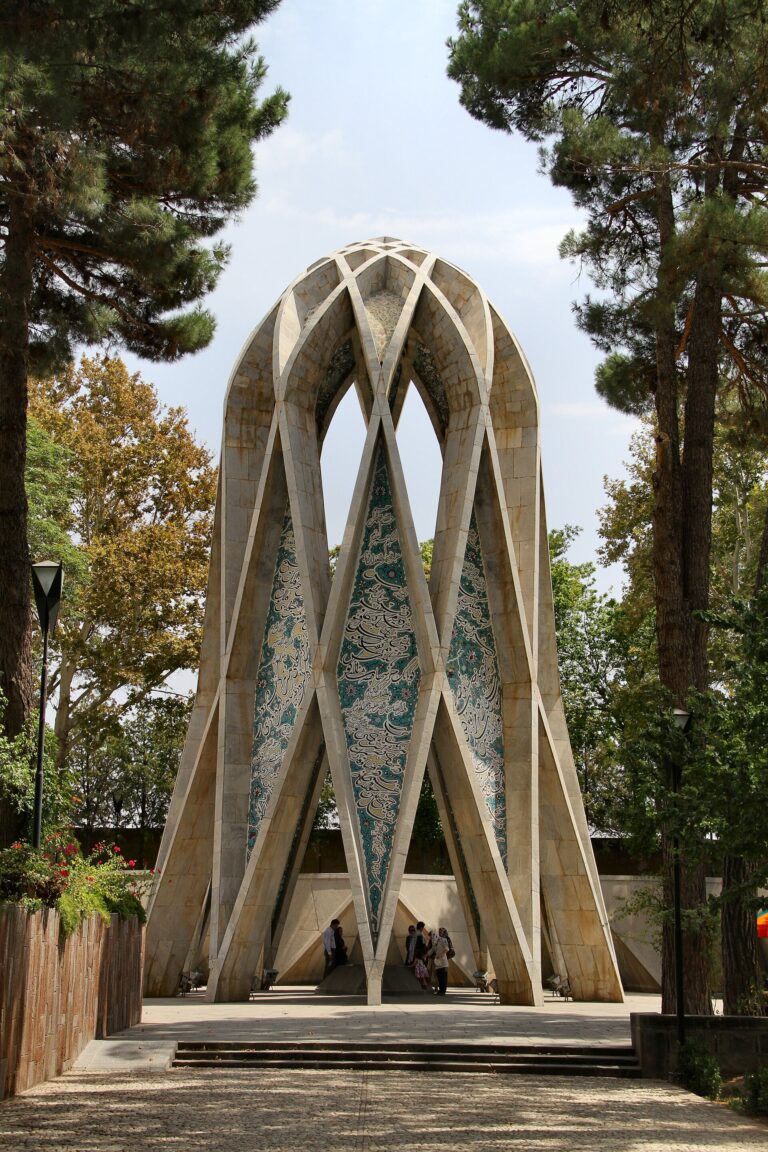
Omar Khayyam
Astronomer, mathematician, and the quatrains of wine and passing time.
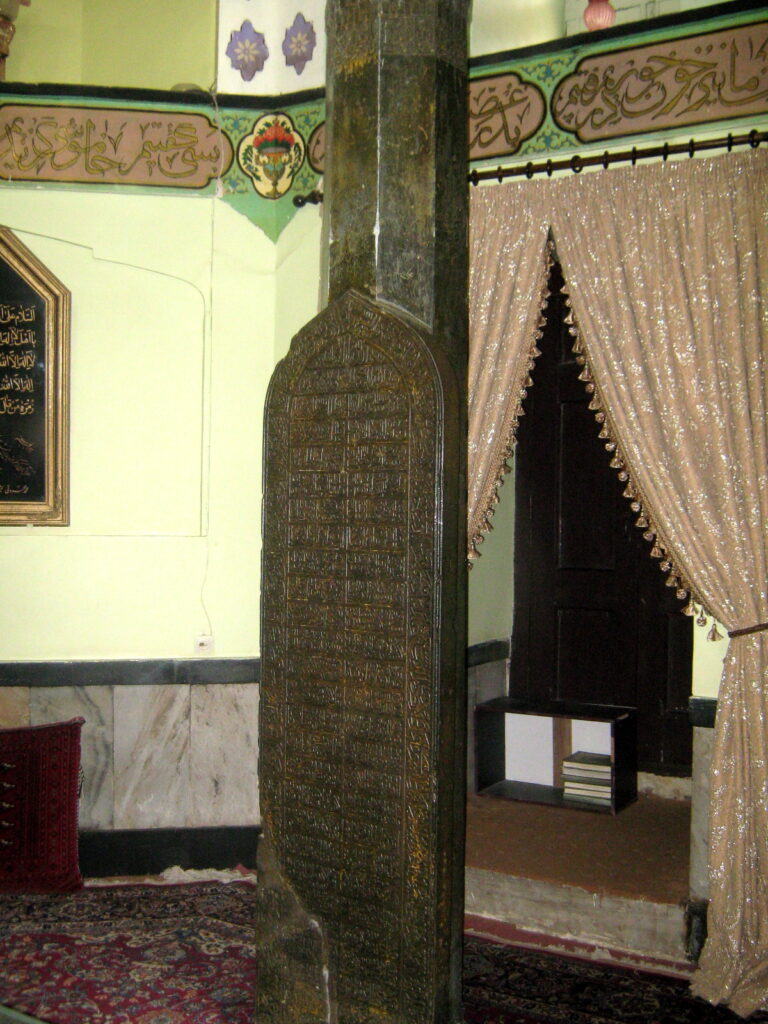
Attar
The Conference of the Birds, a journey of thirty birds in search of their king.
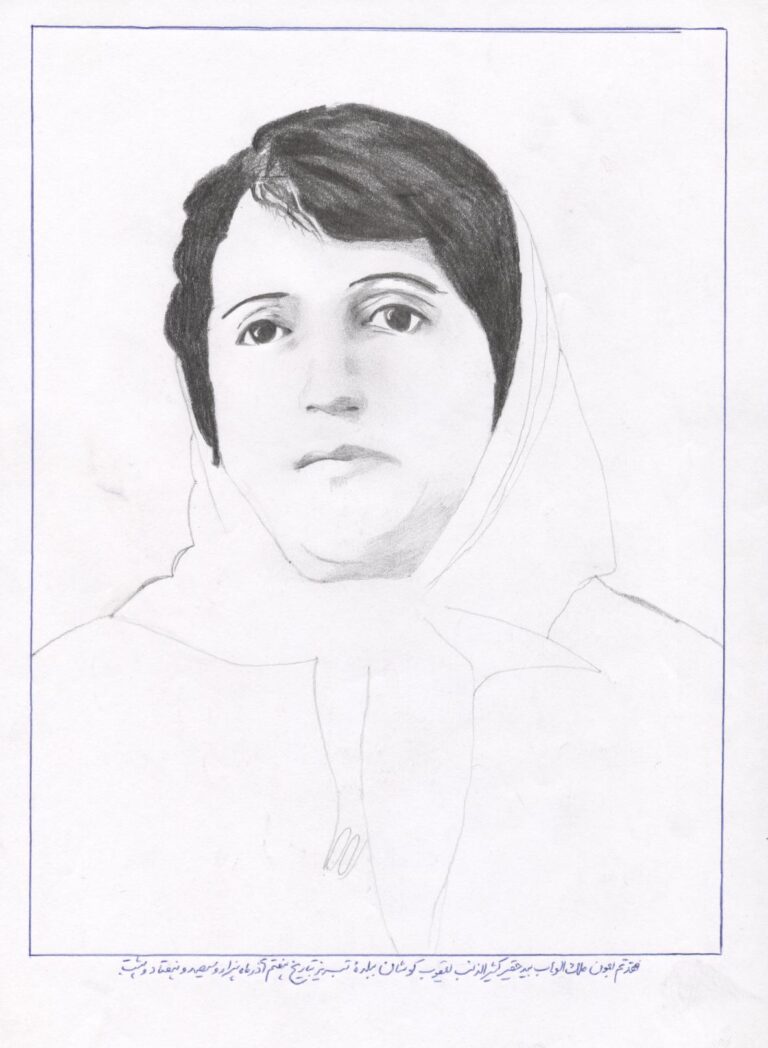
Parvin Etesami
Debates between a needle and thread, a pot and a pan: wisdom in small things.
How Persian poems are built
You do not need to know the rules to love the poems, but knowing a few makes them open up. Persian verse is measured in long and short syllables, and most poems are made of couplets, called beyt, each split into two half-lines, the misra’.
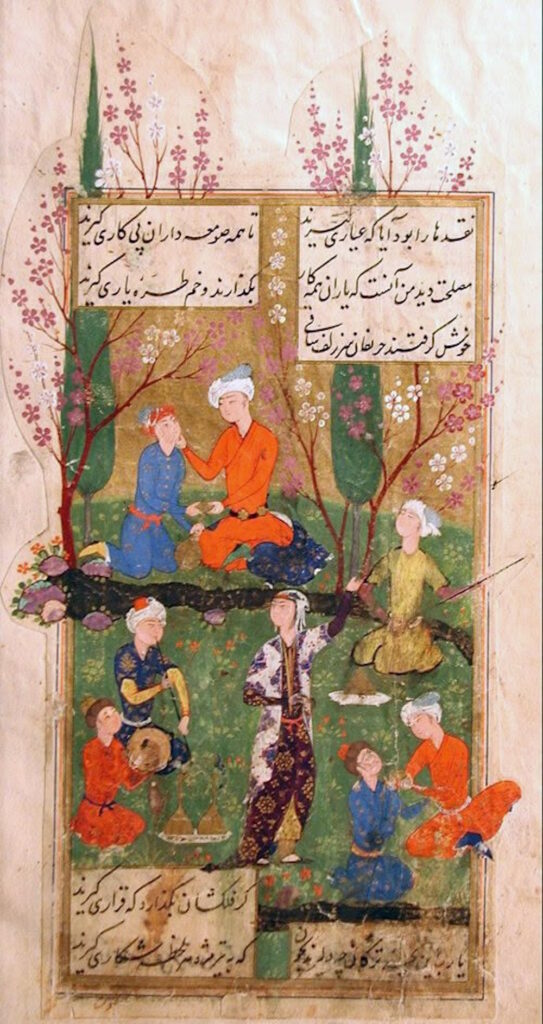
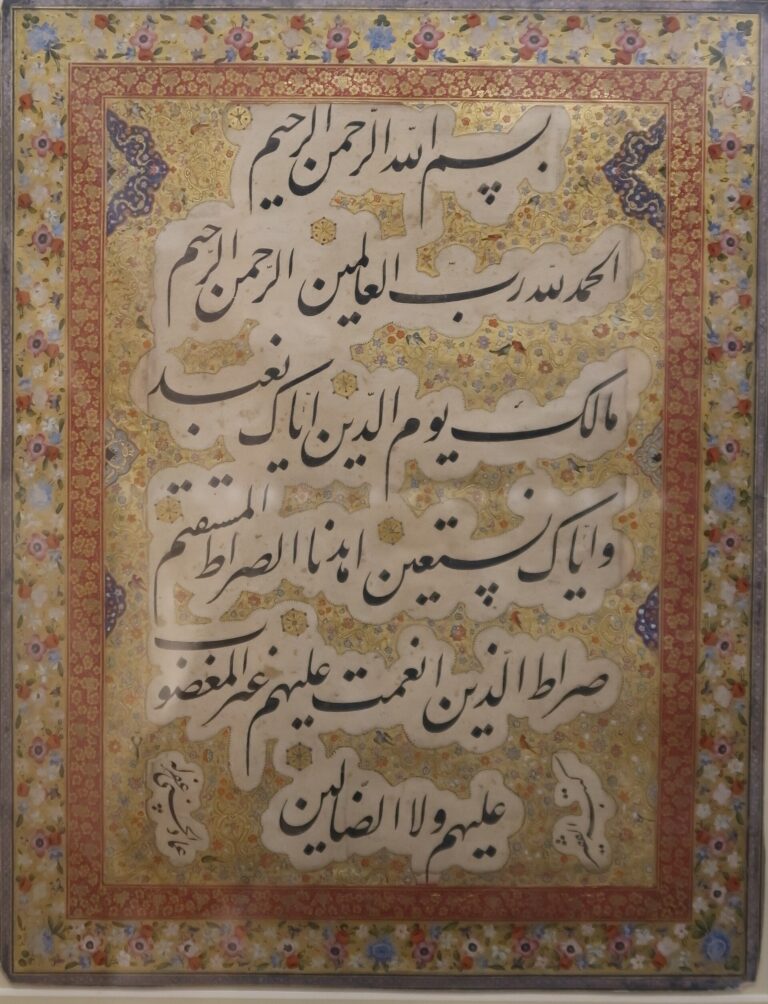
On the page, calligraphers set the two half-lines side by side, and illuminators framed them in gold, as in this Divan of Hafez.
- Ghazal (غزل). A short lyric of usually seven to fifteen couplets, about love, human and divine at once. Every couplet ends on the same rhyme and often the same repeated word, the radif. In the last couplet the poet names himself with his pen name, the takhallos. Hafez is the master of the form.
- Masnavi (مثنوی). Long poems in rhyming couplets, where each couplet has its own rhyme. This is the form for epics, romances and teaching stories: the Shahnameh, Nizami’s romances, Attar’s birds and Rumi’s great Masnavi.
- Roba’i (رباعی). A quatrain of four half-lines, rhyming AABA, in which the fourth line turns the thought. Khayyam made it famous in the West.
- Dobeyti (دوبیتی). A folk quatrain in a lighter, singable metre, the form of Baba Taher and of village songs.
- Qasideh (قصیده). A long, formal ode with one rhyme throughout, once written to praise kings and patrons.
- She’r-e no (شعر نو). “New poetry.” From the 1920s, Nima Yushij broke the old line lengths, and poets such as Sepehri and Farrokhzad followed into free, modern verse.
Living traditions
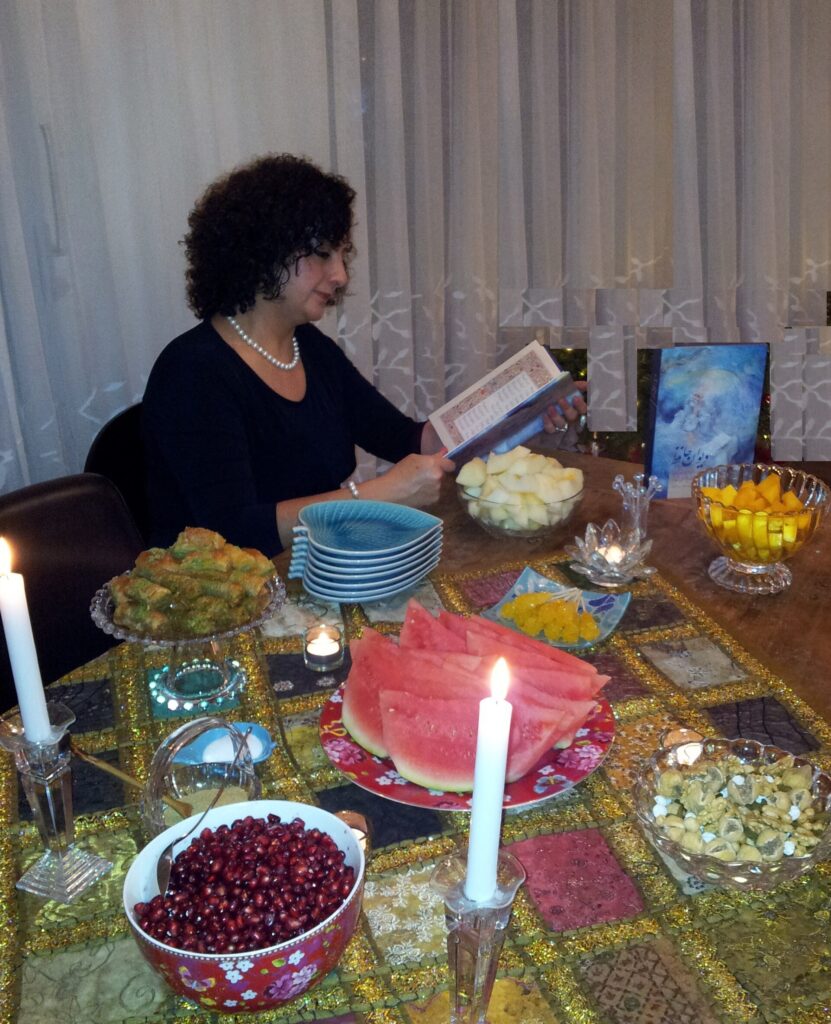
Fal-e Hafez. Make a silent wish, open the Divan of Hafez at random, and read the ghazal on the page: it is your answer. Families do it on Yalda night, at Nowruz and before big decisions. Try it in the Explore district with “Draw a verse.”
Musha’ere (مشاعره). The poetry duel. One person recites a couplet, and the next must answer with a couplet that begins with the last letter of the one before. Run out of verses and you are out. It is played at family gatherings, in schools and even on Iranian television.
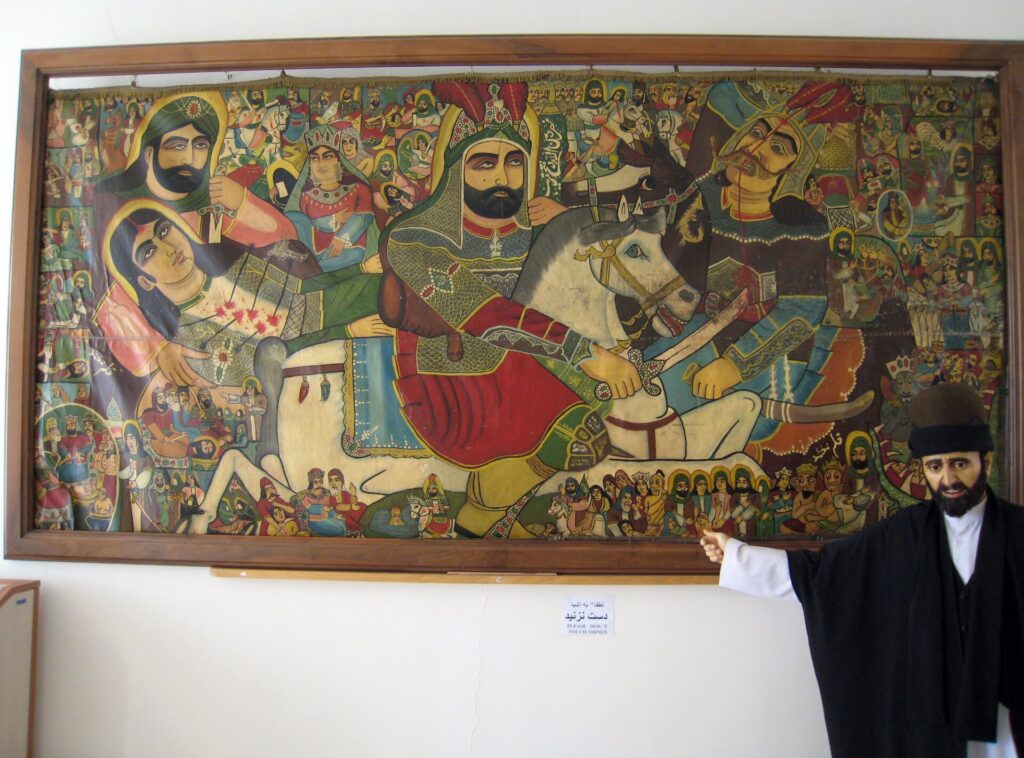
Reading aloud and storytelling. Persian poetry is made to be heard. A good reading is greeted with “bah bah” (به به) or “ahsant” (احسنت). In the coffeehouses, the naqqal performed whole episodes of the Shahnameh from memory, acting out every battle. See naqqali.
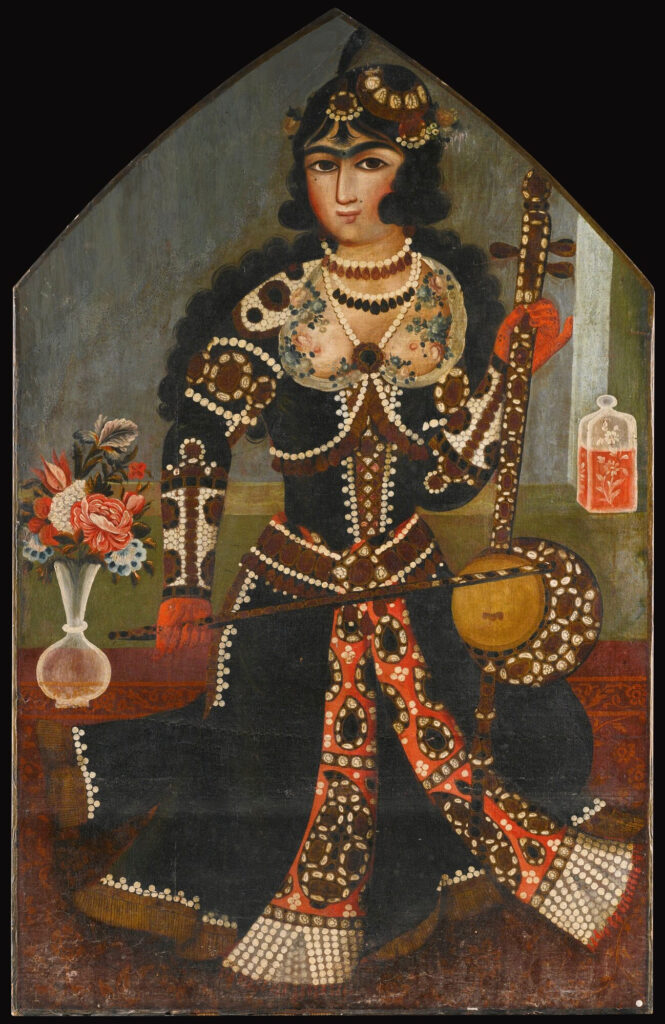
Poetry with music. Classical Persian music is built around poetry. Singers choose a ghazal by Hafez, Saadi or Rumi and set it within a dastgah, the modal system of Persian music. See Persian music.
Poetry nights
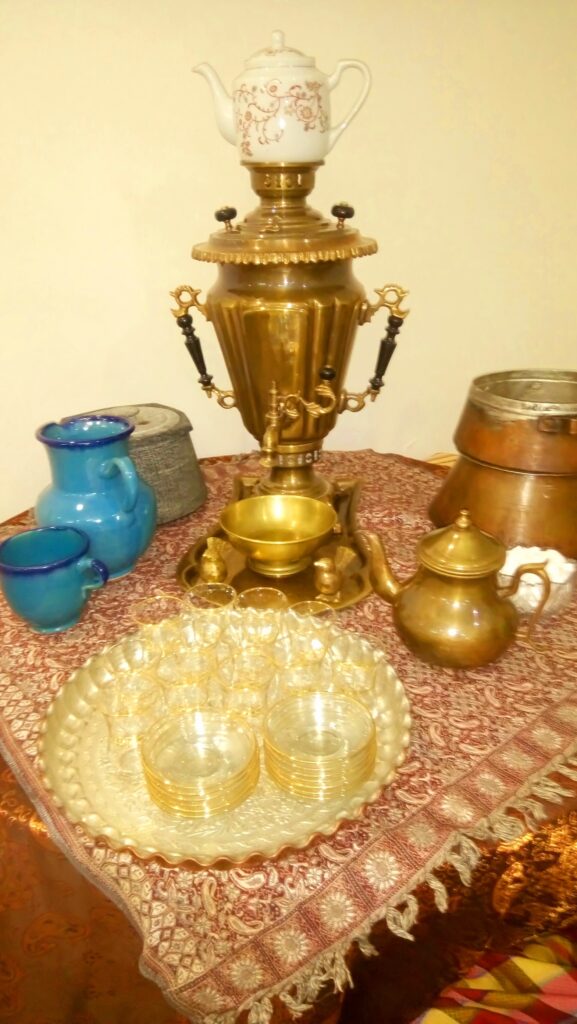
Shab-e she’r, the poetry night, is one of the oldest Persian gatherings: friends, a samovar of tea, a theme, and an evening of reading aloud. Here is how a Pardis poetry night goes, online or around your own table.
There are no poetry nights on the calendar yet. Join the Poetry Circle and you will be the first to hear when the first one is set.
A year of poets
Iran sets aside days in its calendar to honour its poets. These are good moments for a reading, a fal or a musha’ere. Dates in the Iranian calendar fall on roughly the same day each year in the Western calendar.
- Attar Day, 25 Farvardin, around April 14
- Saadi Day, 1 Ordibehesht, around April 21
- Ferdowsi Day, 25 Ordibehesht, around May 15
- Khayyam Day, 28 Ordibehesht, around May 18
- Persian Poetry and Literature Day, 27 Shahrivar, around September 18, honouring the poet Shahriar
- Rumi Day, 8 Mehr, around September 30
- Hafez Day, 20 Mehr, around October 12
- Shab-e Arus, December 17, the anniversary of Rumi’s death, marked in Konya with the whirling ceremony
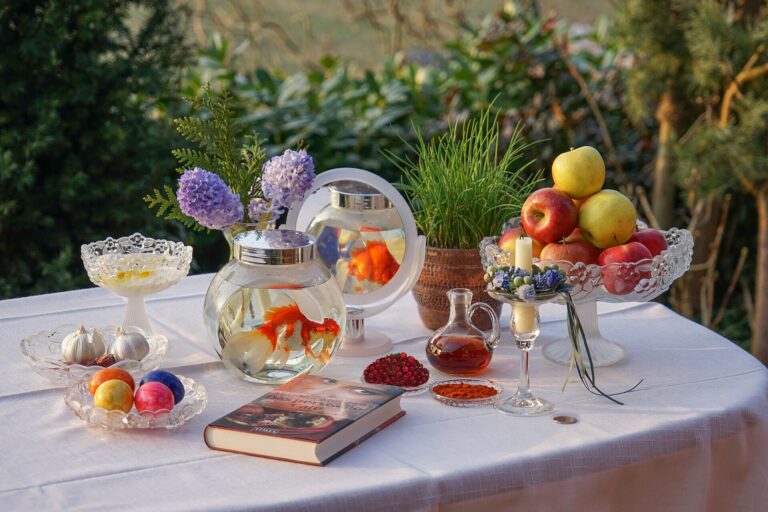
- Shab-e Yalda, the winter solstice, the great night of Hafez
Share your verses
Every family has a poem. Maybe it is the couplet your grandmother said when someone left on a journey, or the Hafez your father opened before he emigrated. The bilingual poetry archive will collect them, in Persian and English, with the stories behind them.
Coming soon: original poems from our community, and books by Persian poets in the diaspora.
Learn more
Heritage travel
The poets’ tombs and gardens, and the Persian heritage you can visit today.
Photo credits
- The Hafezieh under the night sky. Photo: Mshayati, CC BY-SA 4.0, Wikimedia Commons
- The green dome over Rumi’s tomb in Konya. Photo: Murat Özsoy 1958, CC BY-SA 4.0, Wikimedia Commons
- A 16th-century Divan of Hafez, Aga Khan Museum, Toronto. Photo: Daderot, Public domain, Wikimedia Commons
- A portrait of Rudaki. Photo: Michel Bakni, CC BY-SA 4.0, Wikimedia Commons
- The tomb of Ferdowsi at Tus. Photo: Arashk rp2, CC BY-SA 4.0, Wikimedia Commons
- The tomb of Baba Taher in Hamedan. Photo: Fabienkhan, CC BY-SA 2.5, Wikimedia Commons
- The mausoleum of Omar Khayyam in Nishapur. Photo: dynamosquito, CC BY-SA 2.0, Wikimedia Commons
- A statue of Nizami Ganjavi in Rome. Photo: Flazaza, CC BY-SA 4.0, Wikimedia Commons
- The mausoleum of Attar in Nishapur. Photo: Sonia Sevilla, CC0, Wikimedia Commons
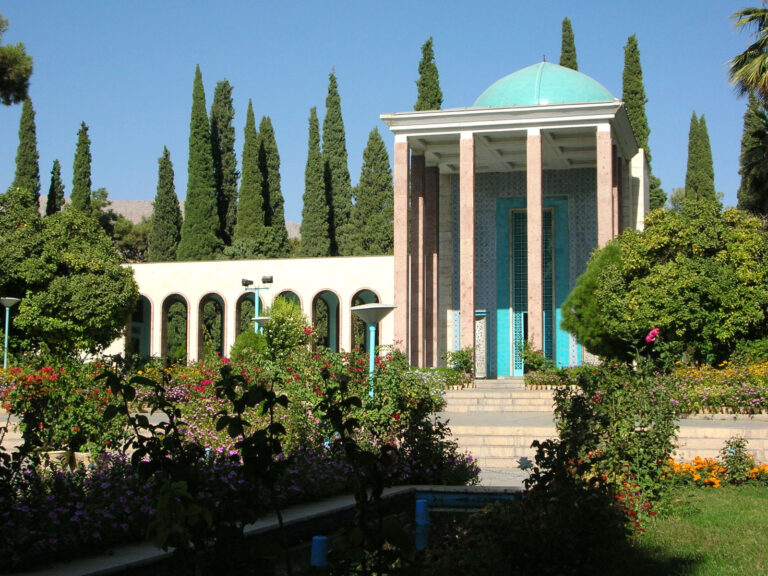
- The tomb of Saadi in Shiraz. Photo: Omid Hatami, Public domain, Wikimedia Commons
- Parvin E’tesami. Photo: Jacopo188, CC BY-SA 3.0, Wikimedia Commons
- Sohrab Sepehri in 1975. Photo: Public domain, Wikimedia Commons
- Forough Farrokhzad. Photo: Unknown authorUnknown author, Public domain, Wikimedia Commons
- A page from a Divan of Hafez. Photo: Unknown authorUnknown author, Public domain, Wikimedia Commons
- Reading Hafez on Yalda night. Photo: PersianDutchNetwork, CC BY-SA 3.0, Wikimedia Commons
- A naqqali performance depicted at the Moharram Museum. Photo: user:Alborz Fallah, CC BY 3.0, Wikimedia Commons
- A kamancheh player, Qajar Iran, about 1820. Photo: unnamed artist, ca. 1820, Qajar Iran, Public domain, Wikimedia Commons
- A charcoal samovar. Photo: Homa Amirian, CC BY-SA 4.0, Wikimedia Commons
- Calligraphy by Mir Emad, 1012 AH. Photo: photo: Nasser-sadeghi; calligraphy: Mir Emad, CC BY-SA 4.0, Wikimedia Commons
- A haft-sin table with goldfish and sabzeh. Photo: Katzenfee50, CC0, Wikimedia Commons
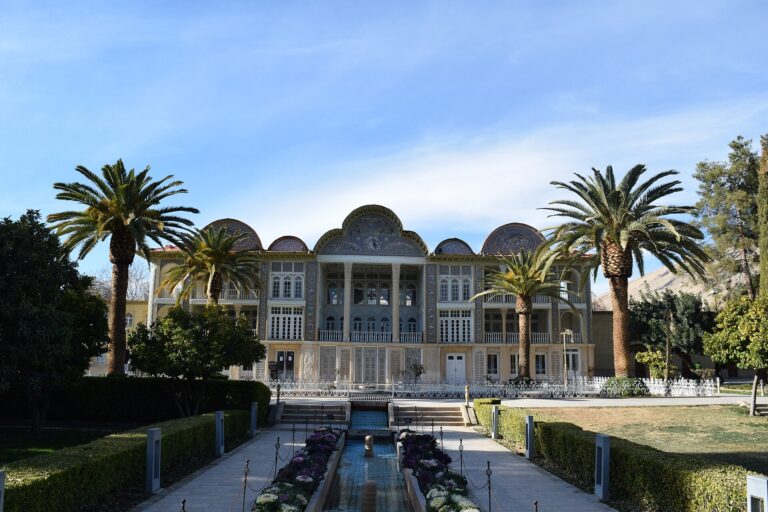
- The pavilion of Eram Garden. Photo: Amin Dehdarian, CC BY-SA 4.0, Wikimedia Commons