
دوش دیدم که ملائک در میخانه زدند
گل آدم بسرشتند و به پیمانه زدند
“Last night I saw the angels knock at the tavern door; they kneaded the clay of Adam and poured it into the cup.” Hafez
Long before there were book clubs, there was shab-e she’r (شب شعر), the poetry night. Friends gather in a home, the tea is poured, and the evening belongs to the poems. Some nights are formal readings with a guest poet. Most are simply a living room, a stack of well-worn books and people who love to hear a verse read well.
Virtual Pardis poetry nights follow the same spirit, online or around your own table. There are none on the calendar yet. When the first is set, members of the Poetry Circle will hear first.
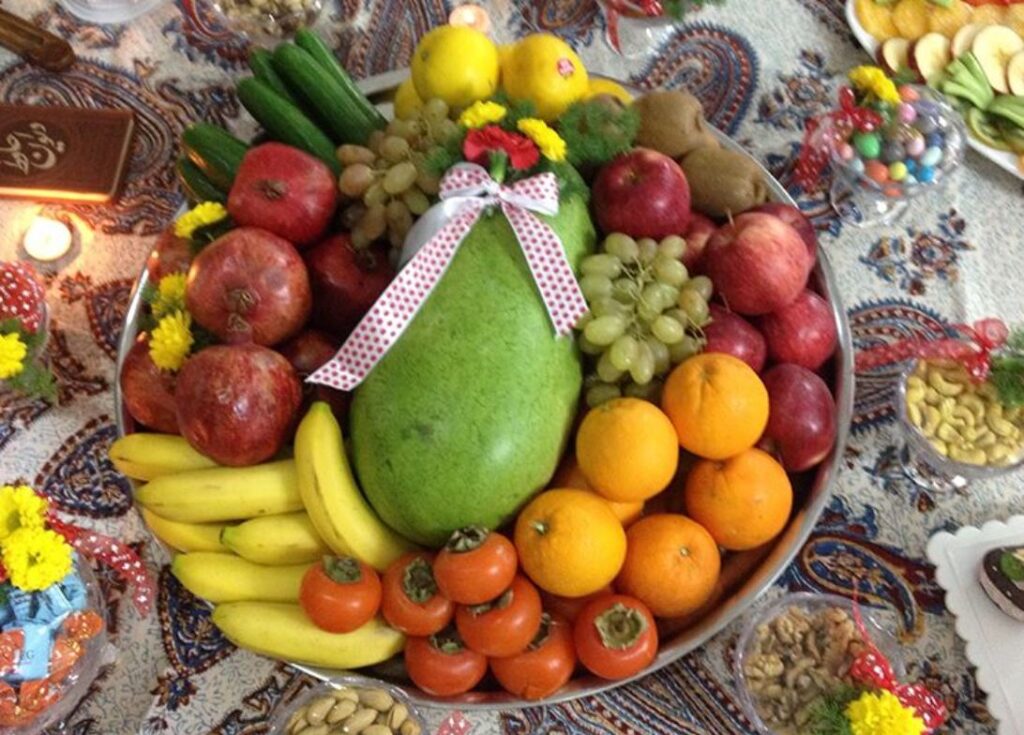
The table matters as much as the poems. Fruit, nuts and sweets are set out, the samovar stays hot, and the Divan of Hafez is never far from reach.
How the evening goes
- Welcome and tea. Guests arrive, greet the host and settle in. At home there is tea in glasses, with nabat (rock-sugar crystals), dates, pastries or sohan. Online, everyone brings their own cup.
- The opening verse. The host opens with a single couplet that sets the mood, often from Hafez or Rumi, read first in Persian and then in English.
- The theme. Each night has a theme: one poet (a Hafez night, a Saadi night), one idea (homeland, spring, separation, friendship) or one season (Yalda, Nowruz). Guests are told in advance so they can choose what to bring.
- The readings. Guests take turns reading a poem they have chosen. Each reading is in Persian, followed by an English version for those still learning. A sentence or two on why you chose it is welcome; a long lecture is not.
- Talking about the poem. After a few readings the room opens up. What does this line mean? Is the wine real wine? Why does this verse make your mother cry? There is rarely one right answer, and that is the pleasure of it.
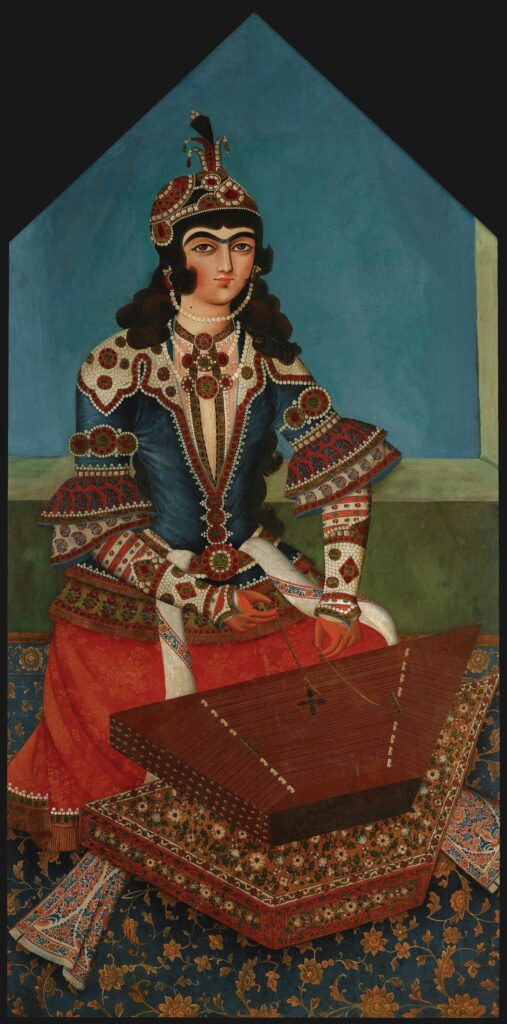
- Music. If someone plays the setar, tar or daf, a ghazal may be sung. Online, the host might play a short recording of a classical singer performing a verse from the evening’s poet.
- Musha’ere. Near the end comes the poetry duel: each person answers with a couplet that begins with the last letter of the one before. It is loud, competitive and always funny.
- The closing fal. The evening ends with a fal-e Hafez. One guest makes a silent wish, the Divan is opened at random, and the ghazal on that page is read aloud as the answer.
Online poetry nights
An online gathering lasts about ninety minutes on a video call. A typical plan:
- First 10 minutes: welcome, introductions and the opening verse
- Next 45 minutes: readings, five or six guests, with time to talk after each two or three
- Next 15 minutes: musha’ere, in teams if the group is large
- Last 10 minutes: the closing fal and what is next
The text of each poem is shared on screen in Persian and English, so that guests who read Persian slowly, or not at all, can follow along. Children are welcome, and a young reader’s first couplet is always the best applause of the night.
Etiquette
- Let the reader finish. Never interrupt a poem. Appreciation comes after the last line.
- Show your appreciation. A good reading earns a “bah bah” (به به), an “ahsant” (احسنت, “well done”) or a favourite line repeated back.
- Every level is welcome. Mispronounce a word, read from a phone, read in English only: all of it is fine.
- Bring one, not ten. One poem you love, read well, is better than many read in a hurry.
Host one yourself
You do not need to wait for us. A poetry night needs only a few friends, tea and a book. Choose a theme, ask each guest to bring one poem, start with a verse and end with a fal. Then tell us about it in the Poetry Circle, so others can borrow your ideas.
Poems to start with
New to Persian poetry? These are well-loved choices for a first night:
- The opening of Rumi’s Masnavi, the song of the reed. See Rumi.
- Hafez, “Lost Joseph will return to Canaan, do not grieve,” a ghazal of hope. See Hafez.
- Saadi’s “The children of Adam are limbs of one body.” See Saadi.
- A quatrain of Omar Khayyam or Baba Taher, short enough for anyone to learn by heart.
Photo credits
- A Yalda table of pomegranates, watermelon and fruit. Photo: Mohammadmosalman, CC0, Wikimedia Commons
- A woman playing the santur, Qajar Iran. Photo: Ahmad, Public domain, Wikimedia Commons
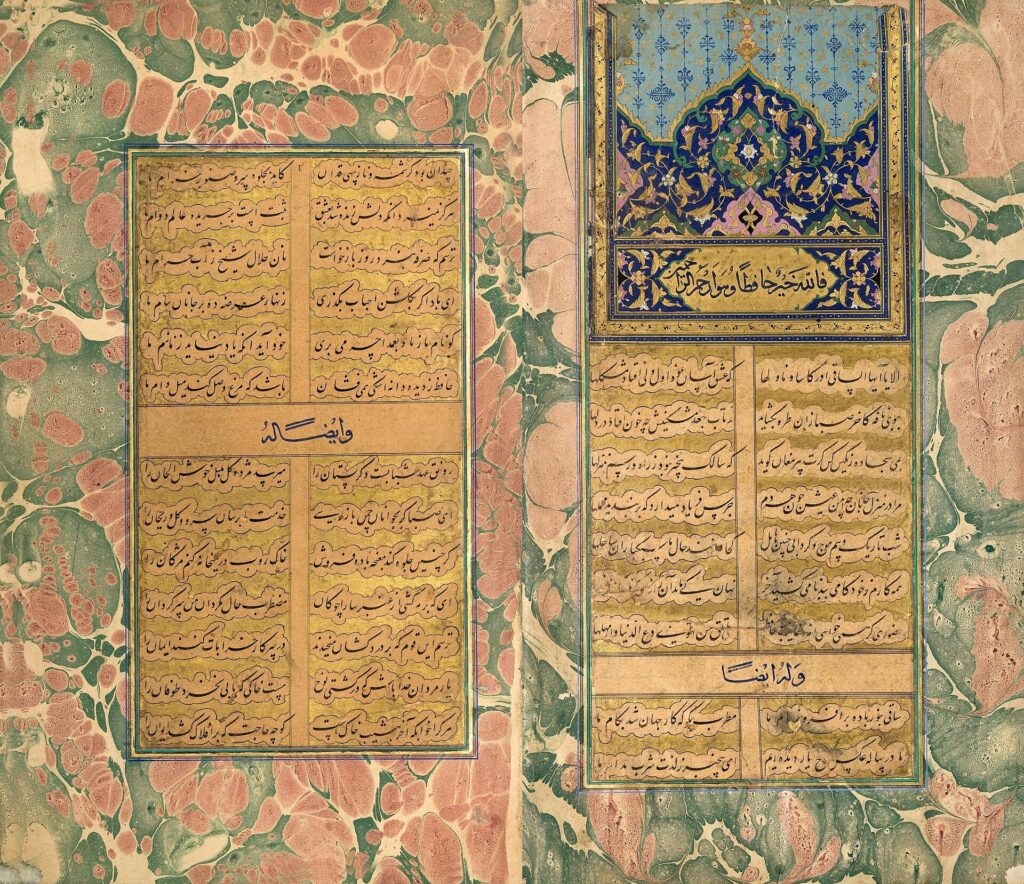
- Pages from a manuscript of the Divan, Malek National Library. Photo: Hafez, Public domain, Wikimedia Commons
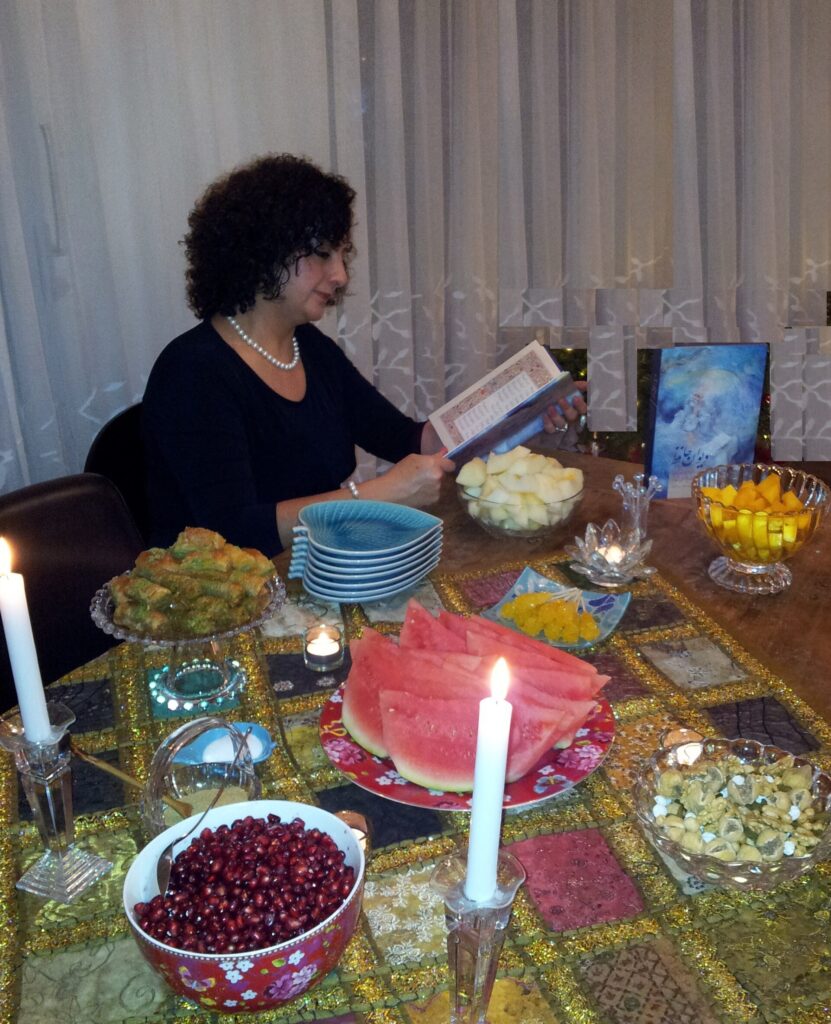
- Reading Hafez on Yalda night. Photo: PersianDutchNetwork, CC BY-SA 3.0, Wikimedia Commons