
توانا بود هر که دانا بود
ز دانش دل پیر برنا بود
“Whoever is wise is strong; through knowledge, an old heart stays young.” Ferdowsi, the Shahnameh
Children of the diaspora often understand Farsi long before they speak it, and speak it long before they can read it. This corner of Virtual Pardis is for them and for the parents and grandparents who want to pass the language on: letters, first words, songs, stories and first verses, a little at a time.
Classes are being planned. There are no classes scheduled yet. Join the Farsi conversation circle to hear first when they start, and tell us your child’s age so we can plan the right groups.
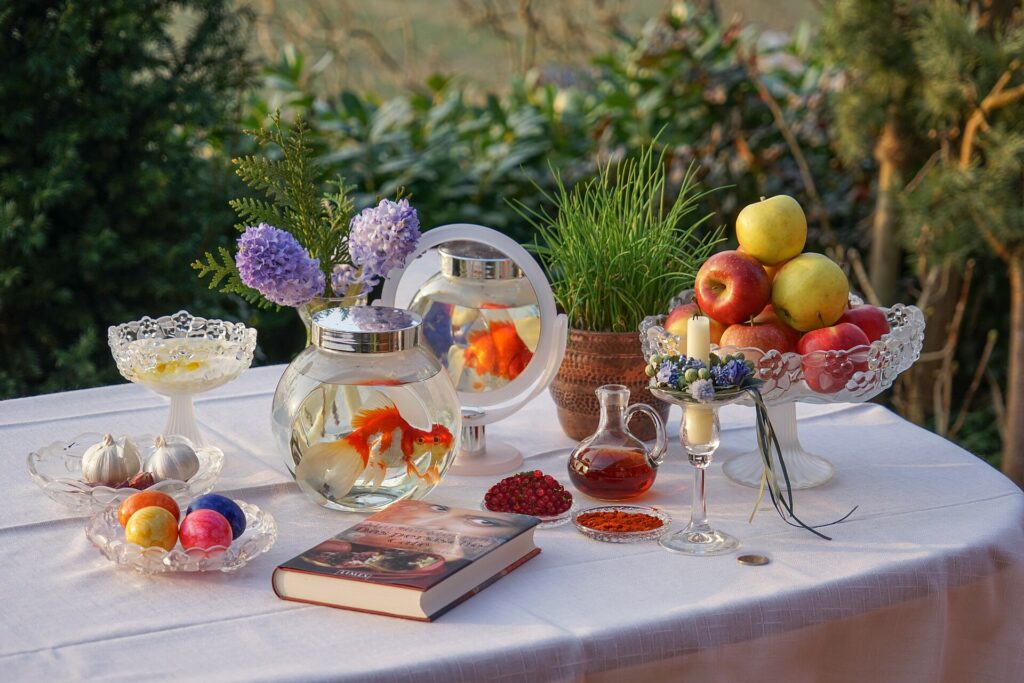
Language lives in the things families do together: setting the haft-sin at Nowruz, reading Hafez on Yalda night, telling the old stories at bedtime. That is where we start.
How we will teach
Sounds and songs
Listening, rhymes, colours, numbers and family words, through songs and games. No reading yet, just the joy of the language.
Letters and stories
The alphabet, first reading and writing, and stories from the Shahnameh and Kelileh va Demneh, the animal fables.
Poems and conversation
Reading on their own, learning verses by heart, a first musha’ere, and talking about the poems they love.
The alphabet
Persian is written from right to left, in 32 letters. Most letters join to the next one, so a letter changes its shape depending on where it sits in a word: at the start, in the middle, at the end or alone. Four letters, پ چ ژ گ, are special to Persian and not found in Arabic.
| Letter | Name | Sound |
|---|---|---|
| ا | alef | a, as in “father” |
| ب | be | b |
| پ | pe | p |
| ت | te | t |
| ث | se | s |
| ج | jim | j |
| چ | che | ch |
| ح | he | h |
| خ | khe | kh, as in “Bach” |
| د | dal | d |
| ذ | zal | z |
| ر | re | r, lightly rolled |
| ز | ze | z |
| ژ | zhe | zh, as in “measure” |
| س | sin | s |
| ش | shin | sh |
| ص | sad | s |
| ض | zad | z |
| ط | ta | t |
| ظ | za | z |
| ع | eyn | a short catch in the throat |
| غ | gheyn | gh, deep in the throat |
| ف | fe | f |
| ق | ghaf | gh |
| ک | kaf | k |
| گ | gaf | g |
| ل | lam | l |
| م | mim | m |
| ن | nun | n |
| و | vav | v, or the vowels u and o |
| ه | he | h, or e at the end of a word |
| ی | ye | y, or the vowel i |
Several letters make the same sound (there are three ways to write “s” and four to write “z”). They come from Arabic words, and children learn them one word at a time.
First words
| Persian | Say it | Meaning |
|---|---|---|
| سلام | salâm | hello |
| مامان | mâmân | mom |
| بابا | bâbâ | dad |
| مادربزرگ | mâdarbozorg | grandmother |
| پدربزرگ | pedarbozorg | grandfather |
| آب | âb | water |
| نان | nân | bread |
| گل | gol | flower |
| خورشید | khorshid | sun |
| ماه | mâh | moon |
| مرسی / ممنون | mersi / mamnun | thank you |
| دوستت دارم | dustet dâram | I love you |
First verses
Children learn poetry the way Iranian children always have: by heart, a couplet at a time, said aloud to the family. Two to start with:
توانا بود هر که دانا بود / ز دانش دل پیر برنا بود
“Whoever is wise is strong; through knowledge, an old heart stays young.” Ferdowsi
بنی آدم اعضای یکدیگرند / که در آفرینش ز یک گوهرند
“The children of Adam are limbs of one body, made from one essence in creation.” Saadi
Stories
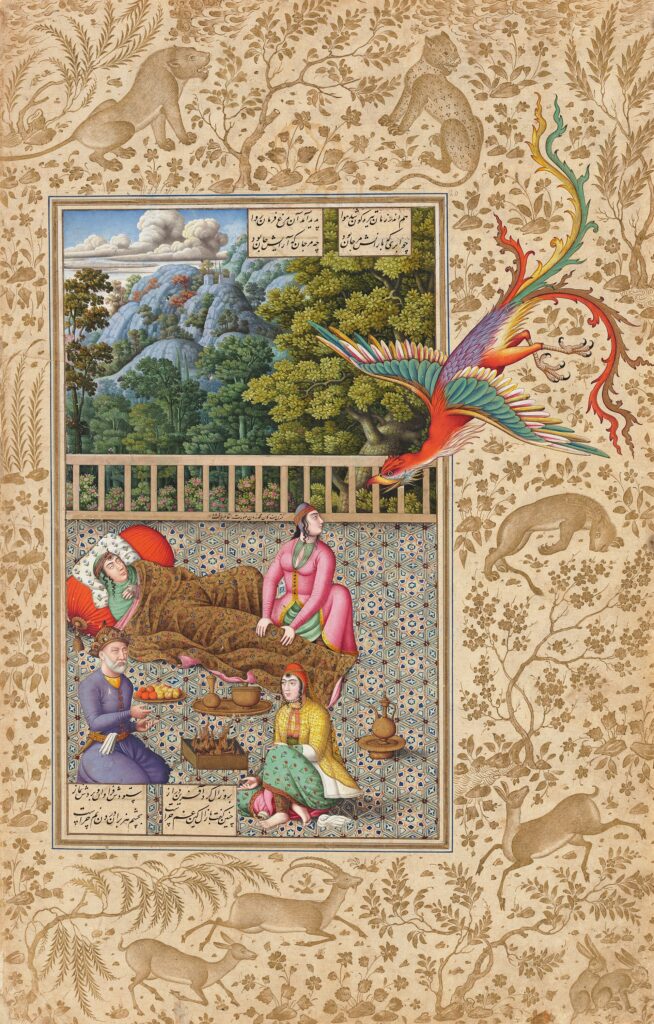
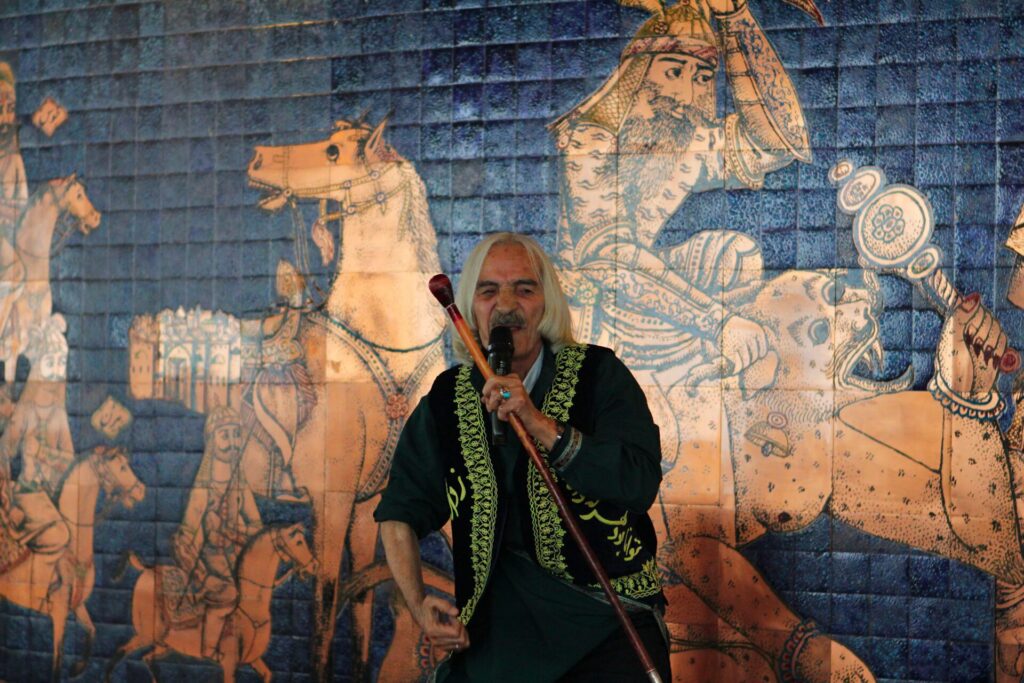
- Shahnameh for kids: Rostam, Sohrab, the Simorgh and the heroes of the Book of Kings, told for young listeners.
- Kelileh va Demneh: animal fables of clever jackals and foolish lions, read in Iran for a thousand years.
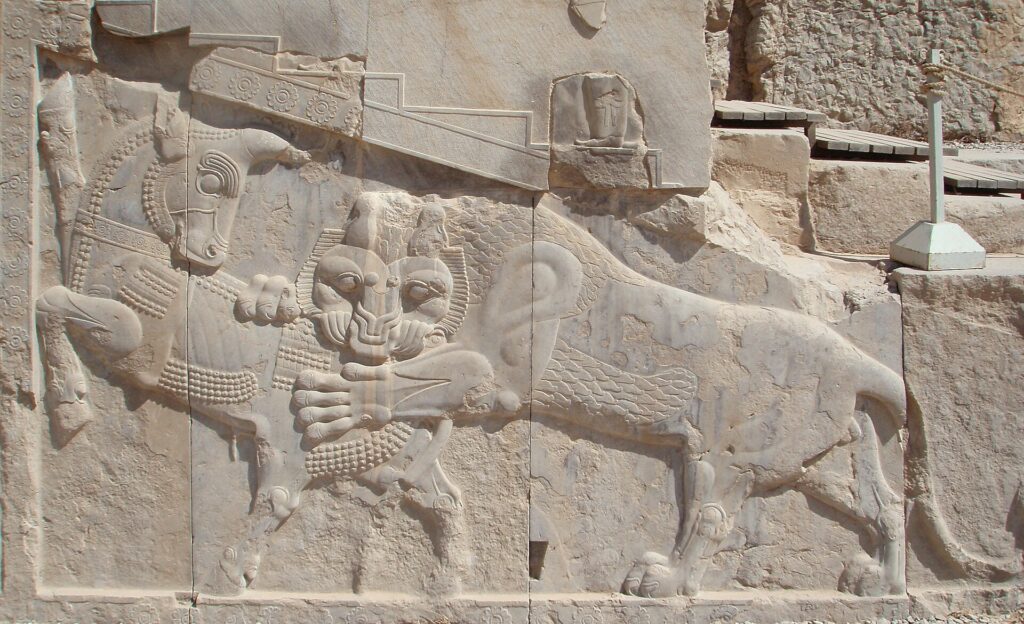
- Nowruz and Yalda: what the haft-sin means, and why we stay up on the longest night. See Nowruz and Shab-e Yalda.
At home: ideas for parents
- Pick a Farsi time. Dinner, bath time or the drive to school: one part of the day in Farsi only.
- Let grandparents lead. A weekly call with grandparents, in Farsi, does more than any app.
- Write their name. Children love seeing their own name in Persian letters. Write it together, then try it in calligraphy.
- Celebrate small wins. A first couplet learned by heart deserves an audience: read it at a family gathering or at a poetry night.
Photo credits
- A haft-sin table with goldfish and sabzeh. Photo: Katzenfee50, CC0, Wikimedia Commons
- The Simorgh arrives to help at the birth of Rostam. Photo: Mohammad Zaman, Public domain, Wikimedia Commons
- A naqqal. Photo: user:Y.movahed, Public domain, Wikimedia Commons
- The lion and bull at Persepolis, often read as a symbol of the spring equinox. Photo: Anatoly Terentiev, CC BY-SA 3.0, Wikimedia Commons