
بنی آدم اعضای یکدیگرند
که در آفرینش ز یک گوهرند
Saadi’s couplet as it is most often written: in nasta’liq.
In Persian culture, calligraphy is the highest of the arts. A poem was not only read but seen, and a fine page of Hafez in a master’s hand was prized more than a painting. Calligraphy covers the tiles of mosques, the margins of manuscripts and the walls of homes across the diaspora, and it is still how most Iranians picture a line of poetry.
Workshops are being planned. There are no calligraphy classes scheduled yet. Start with the beginners’ guide, and join the conversation in the community groups to hear first when classes begin.
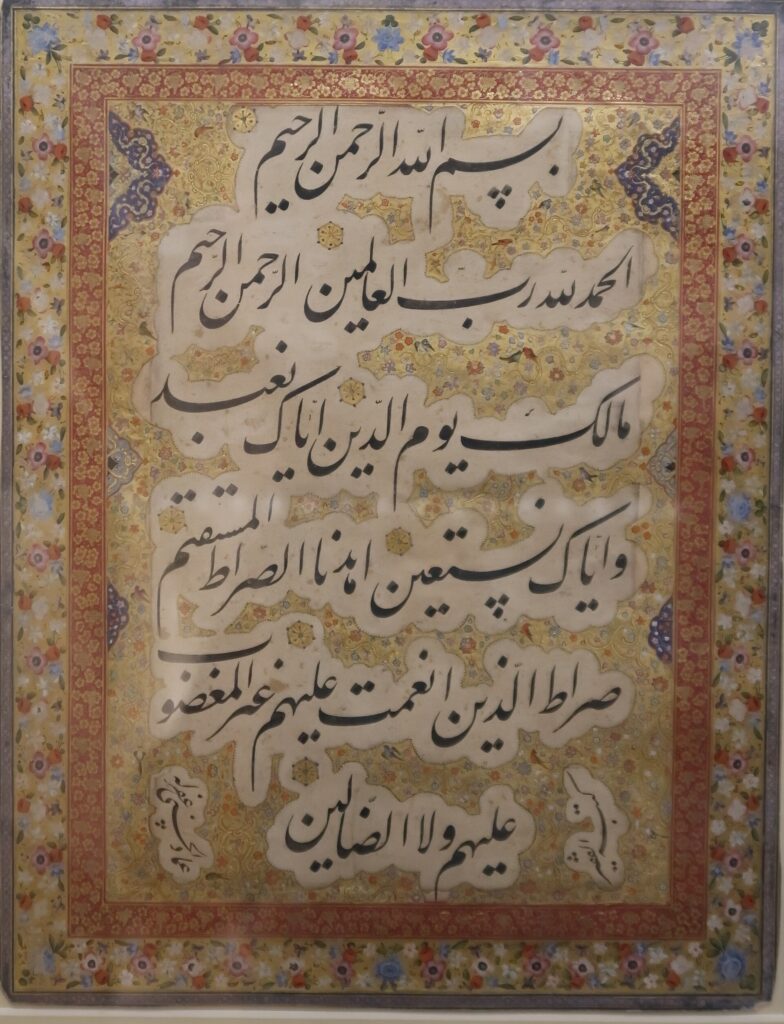
This page in nasta’liq is by Mir Emad Hasani, the sixteenth century master whose hand calligraphers still copy today. Every stroke is measured, and every space between letters is part of the design.
The scripts
- Kufic. The early angular script of the first Qurans and of building inscriptions, still used in bold geometric tilework.
- Naskh. Clear and rounded, the everyday book hand, and the ancestor of the type you read on a Persian website today.
- Ta’liq. A flowing, hanging script that grew up in Iran for letters and documents.
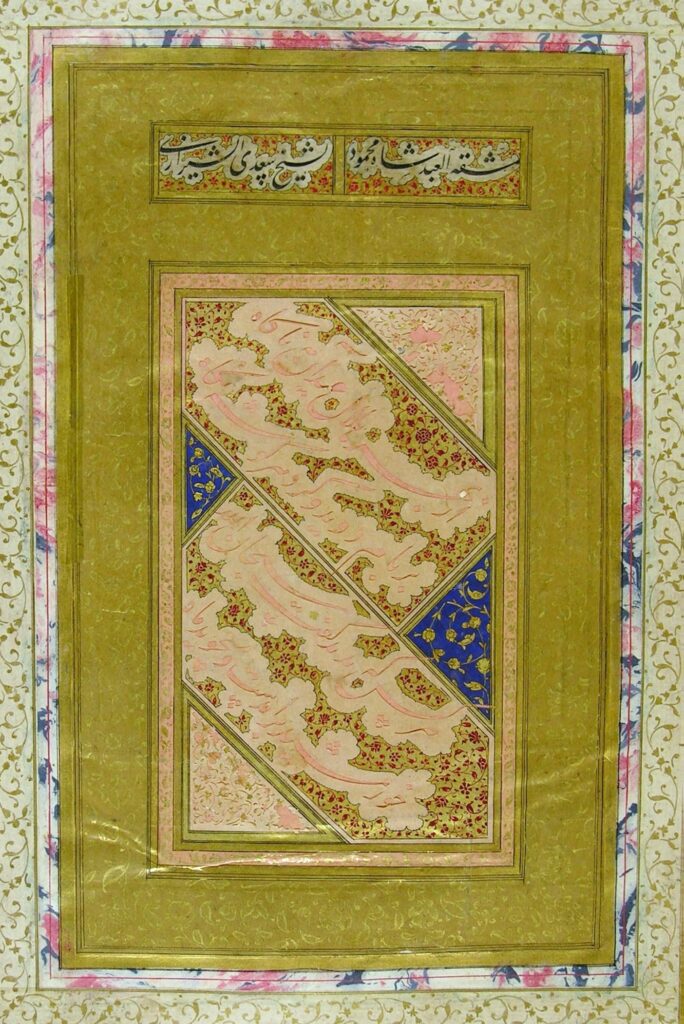
- Nasta’liq. Born in fourteenth and fifteenth century Iran by joining naskh and ta’liq, it is called the bride of scripts: long, sweeping strokes that seem to slope down from right to left. Tradition credits Mir Ali Tabrizi with its invention, and the sixteenth century master Mir Emad Hasani with its perfection. It became the script of Persian poetry. See Nasta’liq calligraphy.
- Shekasteh. “Broken” nasta’liq, faster and more tangled, made for letters and later prized as an art for its energy.
The tools
- The qalam. A pen cut from a dried reed, the same reed as Rumi’s flute. The calligrapher cuts the tip at an angle with a small knife, and the cut decides the line.
- The ink. Traditionally made from soot and gum arabic. A tuft of raw silk in the inkwell, the liqeh, holds the ink so the pen takes just enough.
- The paper. Old manuscript paper was coated and burnished with a stone until smooth, so the reed would glide and mistakes could be gently scraped away.
- The dot. Every letter is measured in rhombic dots made by the pen itself. The height of an alef, the length of a curve: all are set in dots, which is how calligraphers keep perfect proportion.
Siah-mashq: the practice page
Students fill sheet after sheet with the same letters and words, again and again, until the page is nearly black. These practice sheets, siah-mashq (“black practice”), became an art form of their own: masters composed them deliberately, layering letters at different angles into dense, musical pages.
Where poetry and calligraphy meet
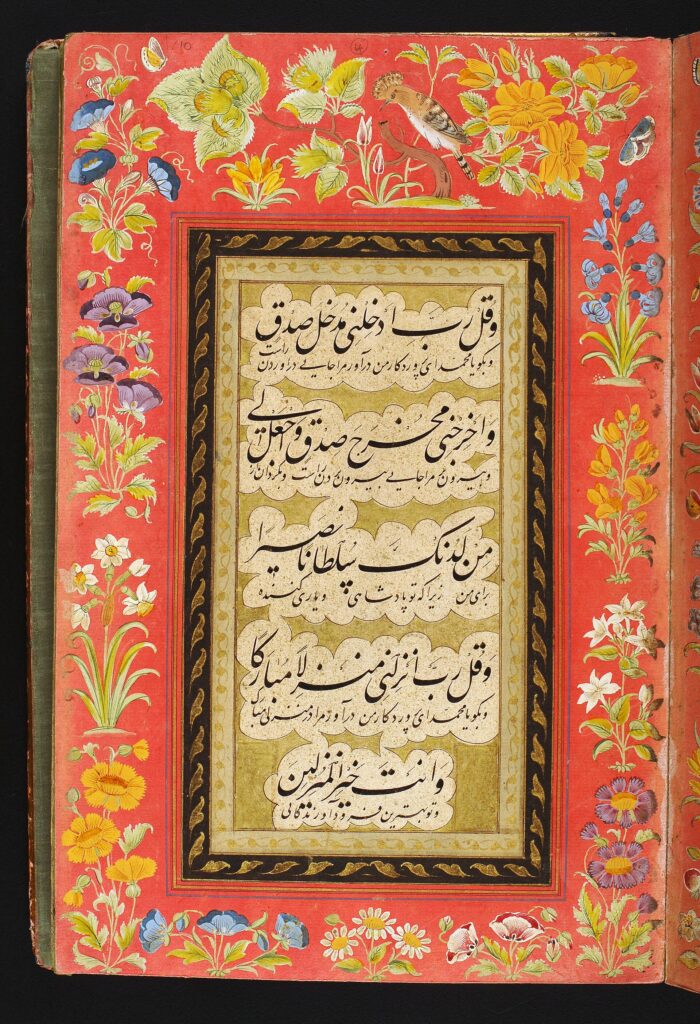
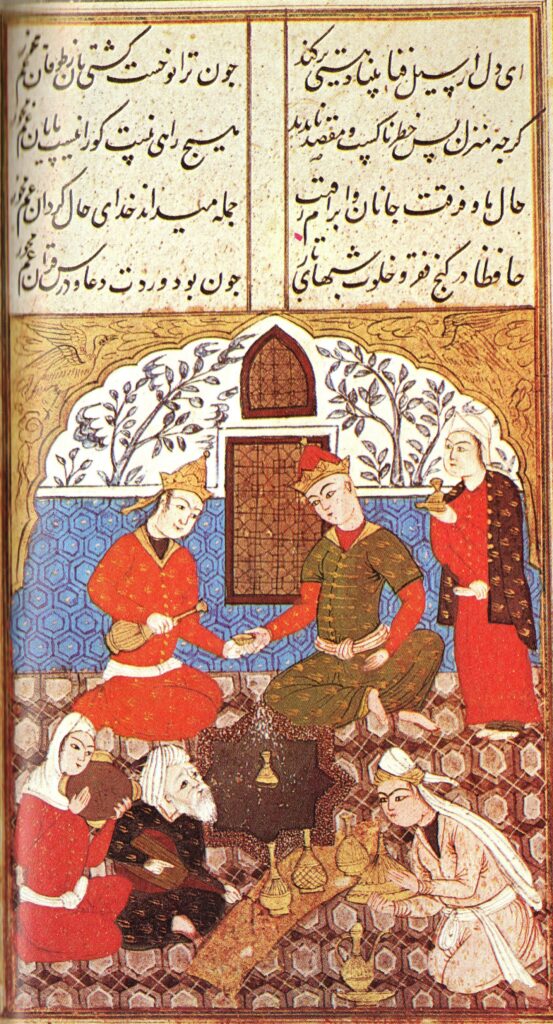
For centuries the great poets were known to most readers through the hands of calligraphers. Manuscripts of the Shahnameh, the Golestan and the Divan of Hafez were written in nasta’liq and illuminated with gold and painting. See the illustrated Hafez, and the ghazal carved on his tombstone at the Tomb of Hafez.
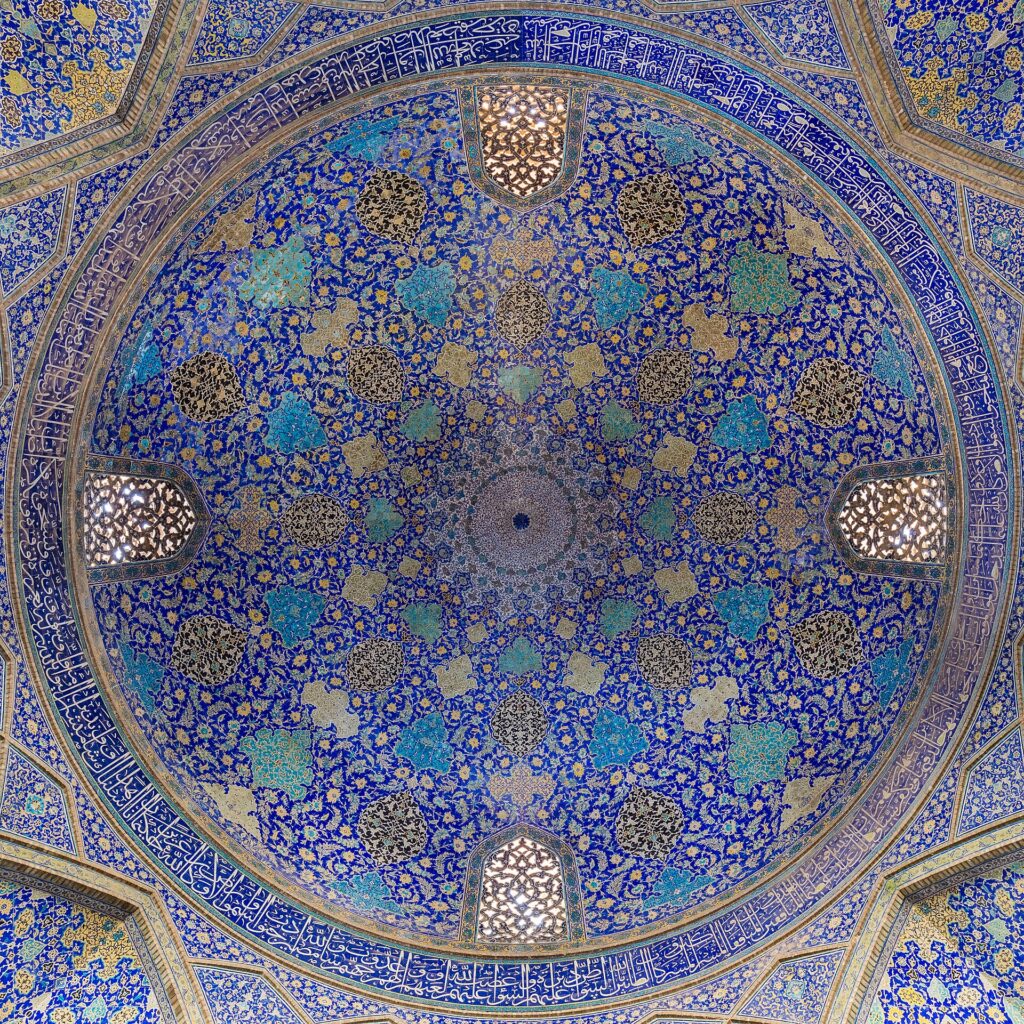
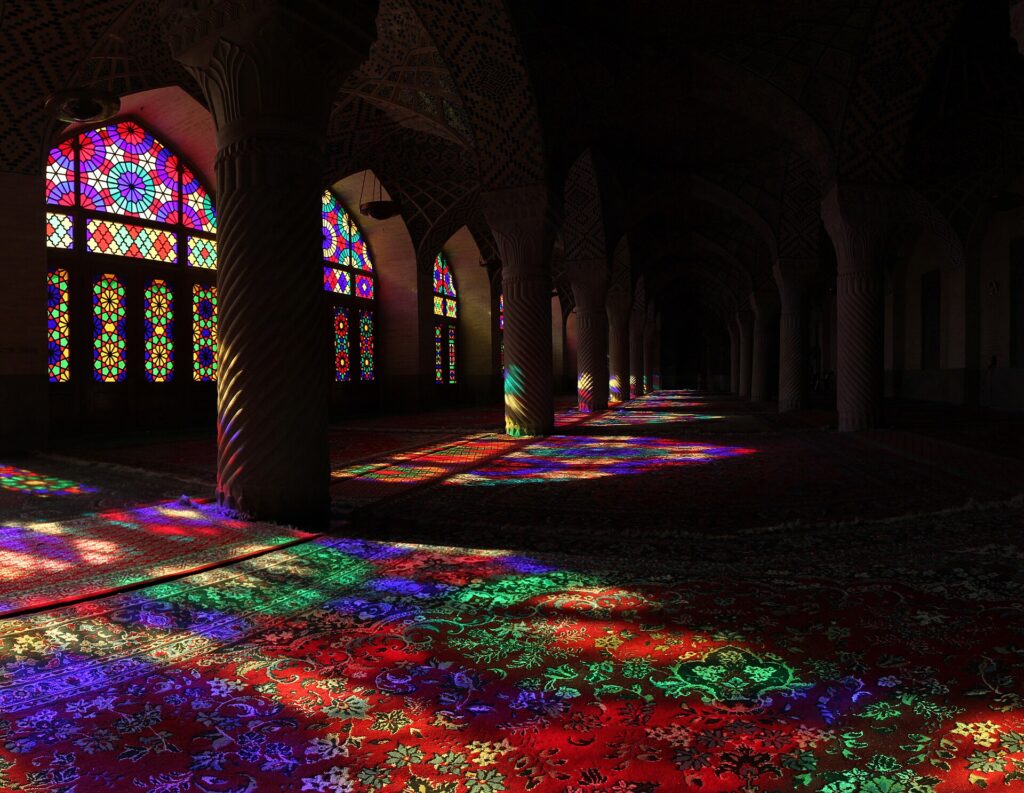
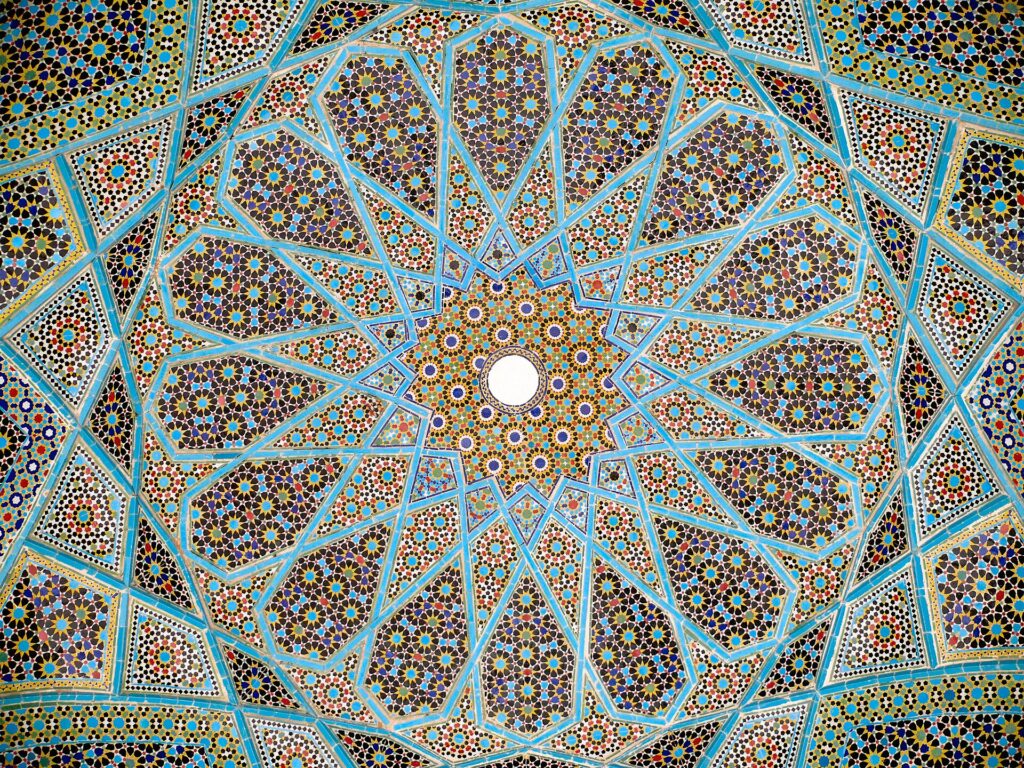
Calligraphy does not stay on paper. Inscriptions in tile run around the domes of Isfahan and Shiraz, set among the geometric stars and flowering vines of Persian design.
Learning path
Know the letters
Learn the alphabet and how letters join. Children can start with Farsi for kids.
Cut a pen, make a dot
A reed or bamboo pen, or a broad-nib marker to start. Practise the dot until it is clean, then the alef.
Single letters
Copy each letter from a master’s model, measured in dots, filling whole pages with one shape.
Your first couplet
Write a short verse you love: your name, a line of Saadi, a couplet of Hafez.
Photo credits
- Calligraphy by Mir Emad, 1012 AH. Photo: photo: Nasser-sadeghi; calligraphy: Mir Emad, CC BY-SA 4.0, Wikimedia Commons
- A calligraphic specimen in nastaliq. Photo: Fahri Bursavi, Public domain, Wikimedia Commons
- A page from a nastaliq calligraphy album. Photo: Unknown artistUnknown artist, Public domain, Wikimedia Commons
- A manuscript of the Divan of Hafez, copied in 1584. Photo: Unknown authorUnknown author, Public domain, Wikimedia Commons
- Tilework inside the great dome. Photo: Diego Delso, CC BY-SA 4.0, Wikimedia Commons
- Tilework at the Nasir al-Mulk Mosque. Photo: Ayyoubsabawiki, CC BY-SA 4.0, Wikimedia Commons
- Tile mosaic beneath the dome. Photo: Pentocelo, CC BY 3.0, Wikimedia Commons