The Throne of Jamshid
For centuries after it fell, people living on the Marvdasht plain did not know who had built the great ruined platform above them. They named it after Jamshid, the legendary king of the Shahnameh who, in the old stories, first celebrated Nowruz. Others called it Chehel Menar, the Forty Minarets, after the columns still standing. The Greeks knew it as Persepolis, “the city of the Persians.” To the kings who built it, it was simply Pārsa.
Building a capital for an empire
Darius the Great began the terrace around 518 BC, a generation after Cyrus founded the empire at nearby Pasargadae. Workers levelled the rock at the foot of Kuh-e Rahmat, the Mountain of Mercy, and built up the rest with massive blocks of grey limestone fitted without mortar. Darius’s son Xerxes and grandson Artaxerxes I kept building for most of the next century.
The result was less a city than a stage for the empire. Scholars still debate exactly how it was used. A long-held view, shared by the excavator Ernst Herzfeld, is that the kings gathered the peoples of the empire here at Nowruz, the new year at the spring equinox. Whether or not that is right, everything at Persepolis was designed to show an empire of many nations meeting around one king.
Walking through Persepolis
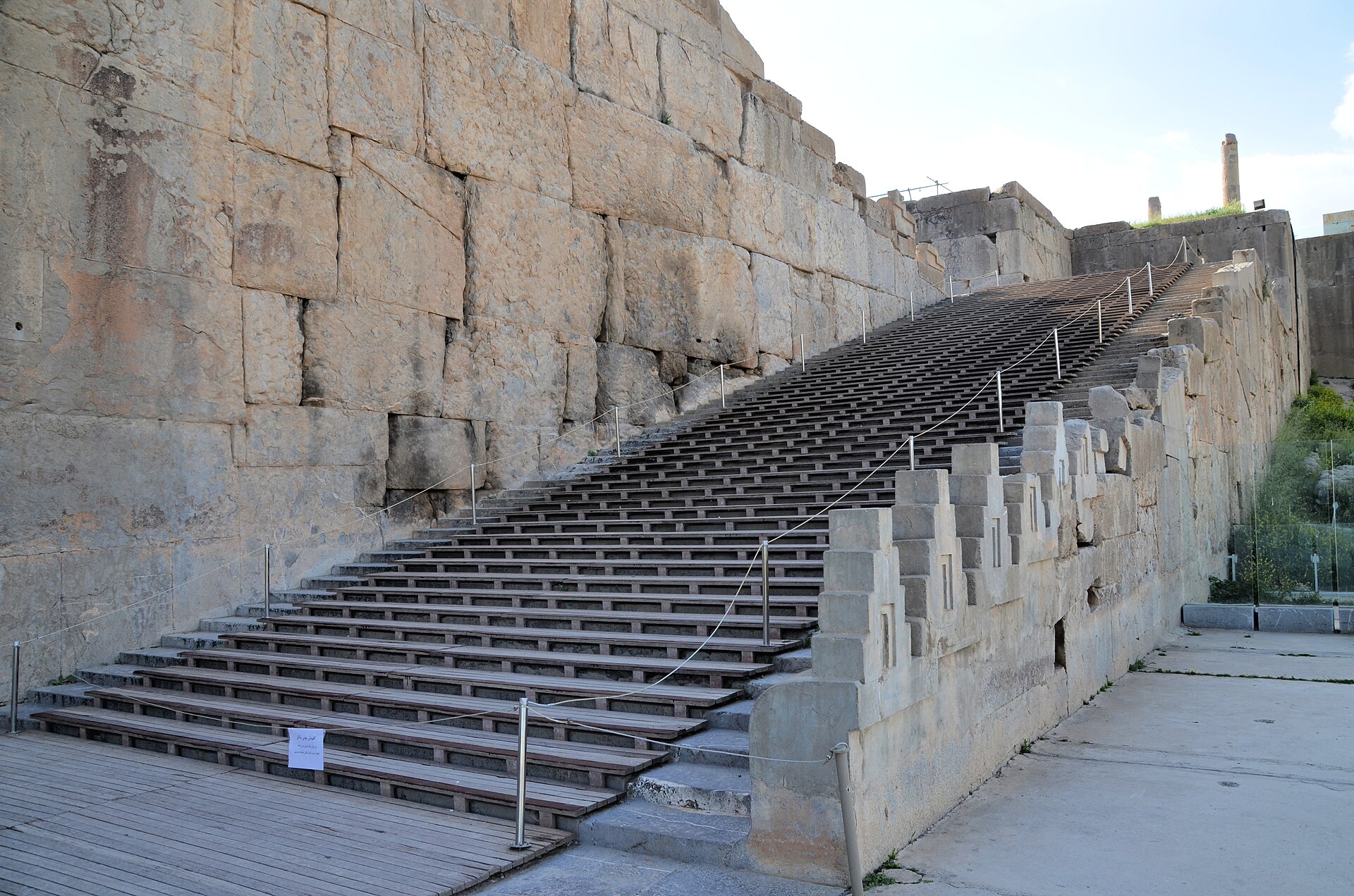
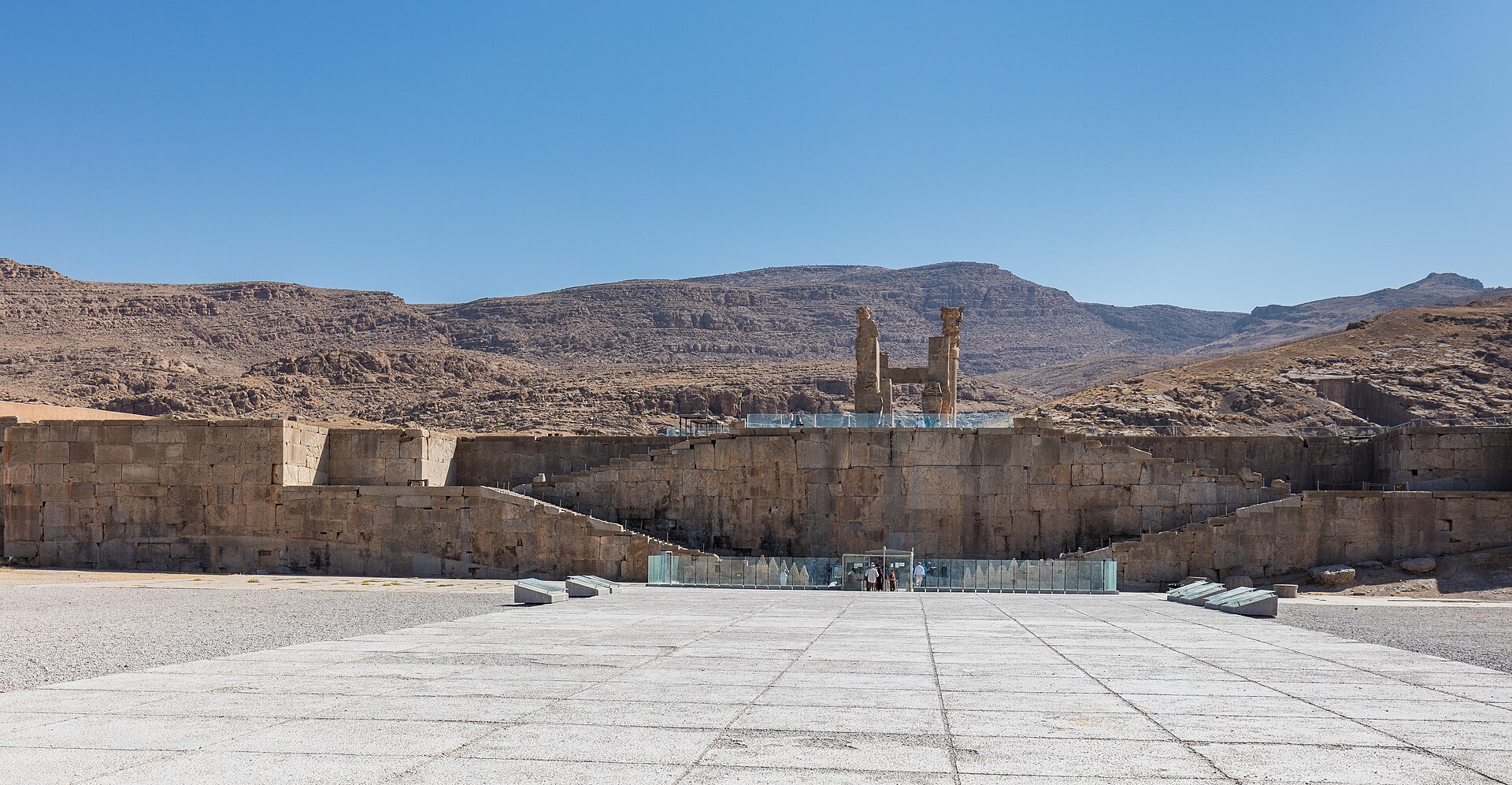
The Persepolis Stairway. Visitors still climb the same double staircase, its steps so low and broad that, it is said, dignitaries could ride up them on horseback.
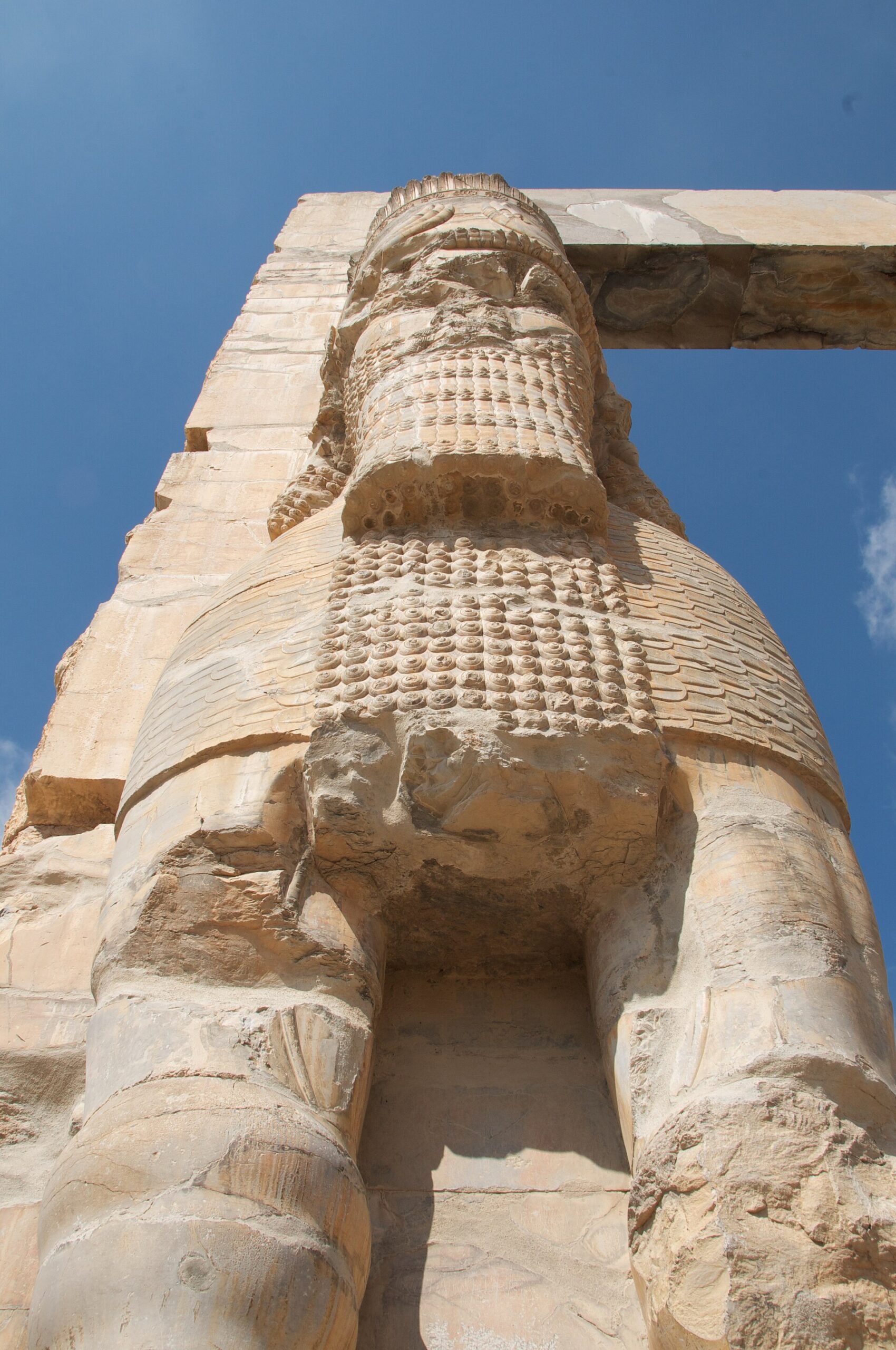
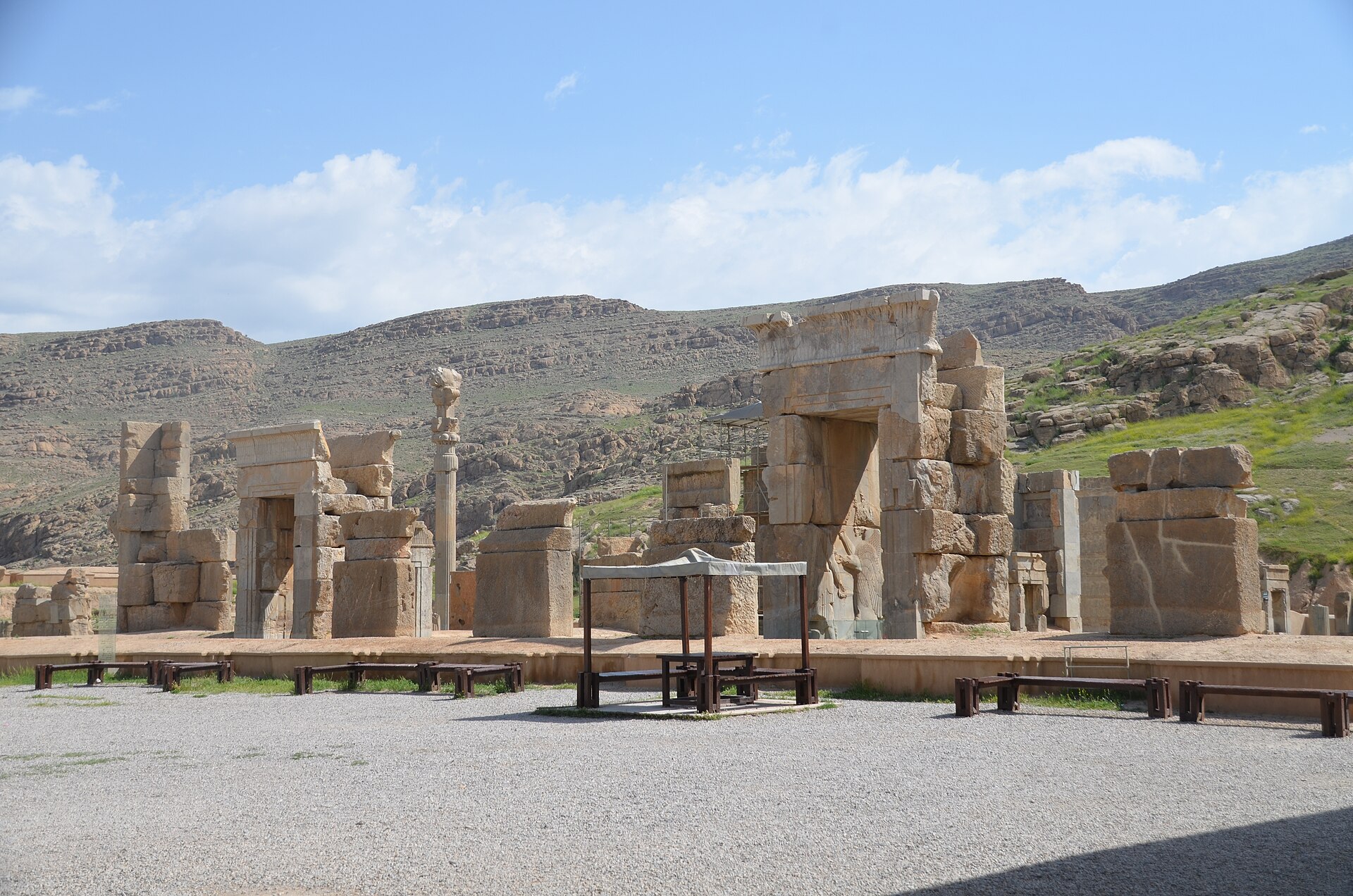
The Gate of All Nations. Built by Xerxes, the gate is guarded by colossal winged bulls, the lamassu, with an inscription in Old Persian, Elamite and Babylonian announcing that the king built it “by the favour of Ahura Mazda.”
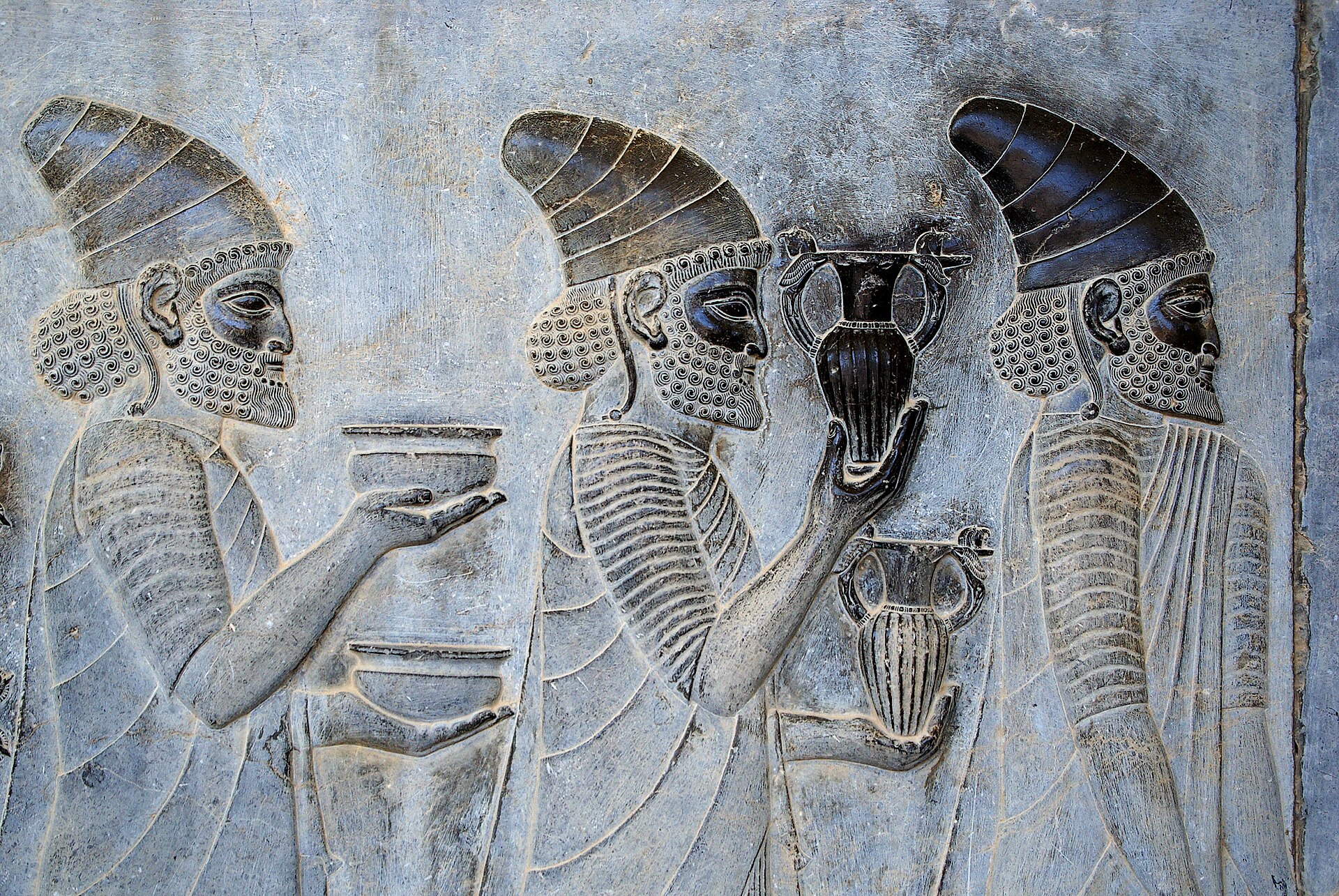
The Apadana. Darius’s great audience hall was the largest building on the terrace, its roof once carried on 72 stone columns topped with carved bulls, lions and griffins. Its staircases hold the most famous reliefs at Persepolis: delegations from across the empire, Lydians and Armenians with wine, others with gold, textiles, horses and camels, each people in its own dress, each led by the hand to the king. They are among the finest stone carvings of the ancient world.
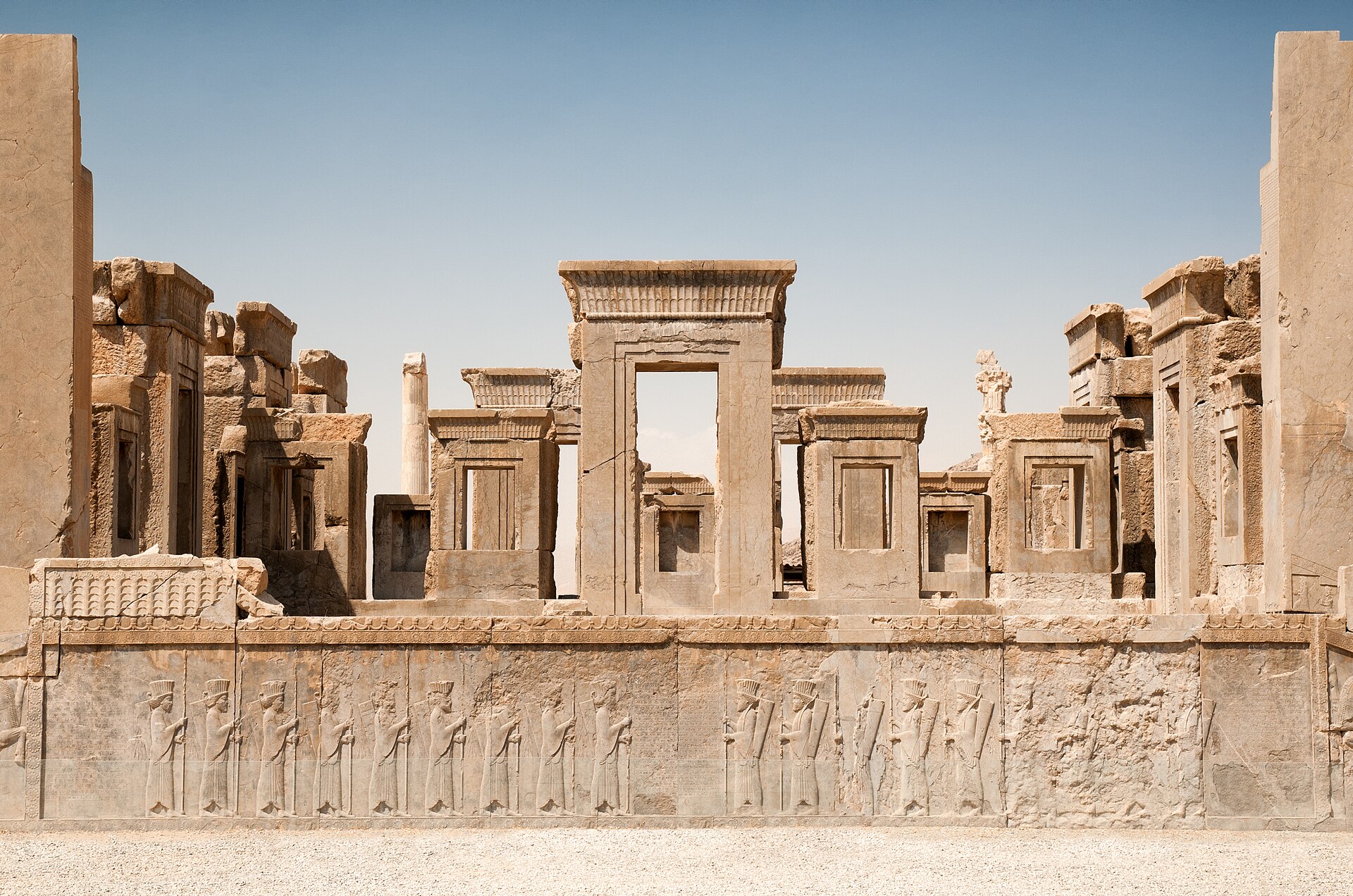
The Tachara. Darius’s private palace is the oldest building on the terrace and the best preserved, because it escaped the fire that destroyed the rest. Its dark stone was polished so finely that it is still called the Hall of Mirrors.
The Hall of a Hundred Columns. Begun by Xerxes and finished by Artaxerxes I, this throne hall measured about 70 metres on each side, the second largest building at Persepolis.
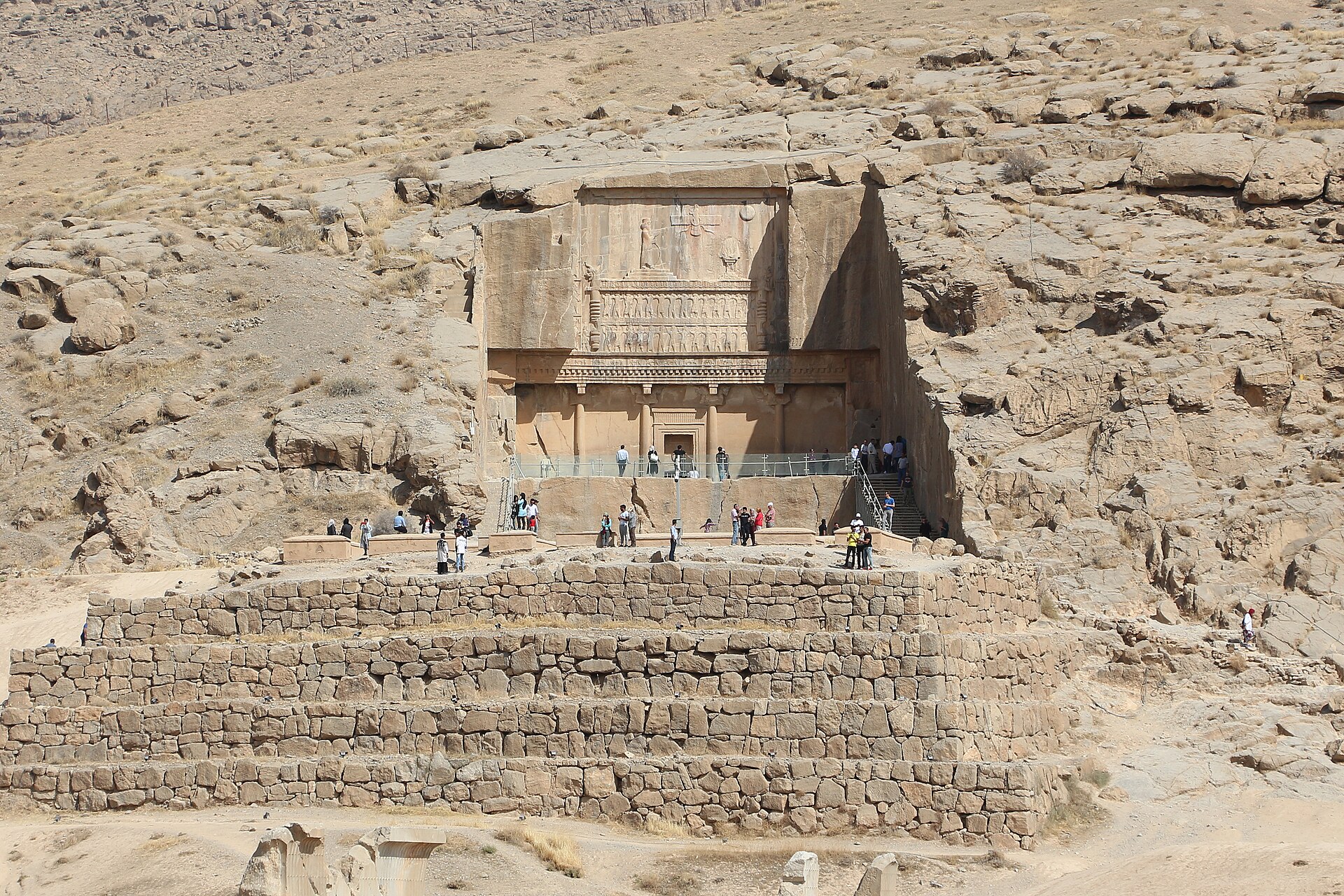
The royal tombs. Above the terrace, the tombs of Artaxerxes II and Artaxerxes III are cut into the mountain. A short drive away at Naqsh-e Rostam, the tombs of Darius the Great and his successors are carved into a sheer cliff in the shape of a cross.
The people who built it
In the 1930s, excavators found tens of thousands of clay tablets in the fortification wall and the treasury. Written mostly in Elamite, they are the payroll of the empire: rations of grain, wine and beer issued to workers, travellers and officials. They show that Persepolis was built by paid craftsmen and labourers from across the empire, men and women alike, and that new mothers received extra rations. Ironically, these records survived because the fire of 330 BC brought walls down on top of them.
Fire and rediscovery
In 330 BC Alexander the Great took Persepolis after the Battle of the Persian Gates, where the Persian commander Ariobarzanes held the mountain pass for a month. Alexander let his army loot the treasury, and soon afterwards the palaces burned. Ancient writers disagree about why: some say it was revenge for the Persian burning of Athens; Plutarch, Diodorus and Curtius tell of a drunken feast at which the courtesan Thaïs urged Alexander to set the first torch. The wooden roofs and much of the complex were lost.
European travellers began to identify the ruins in the 1600s. In 1621 Pietro Della Valle counted 25 of the Apadana’s 72 columns still standing. Scientific excavation began in 1931 under Ernst Herzfeld and Erich Schmidt for the Oriental Institute of the University of Chicago, followed by Iranian archaeologists who have worked here ever since. In 1971 Persepolis hosted the celebration of 2,500 years of the Persian Empire, and in 1979 it was among the first sites in Iran inscribed on the UNESCO World Heritage List.
The lotus of Persepolis
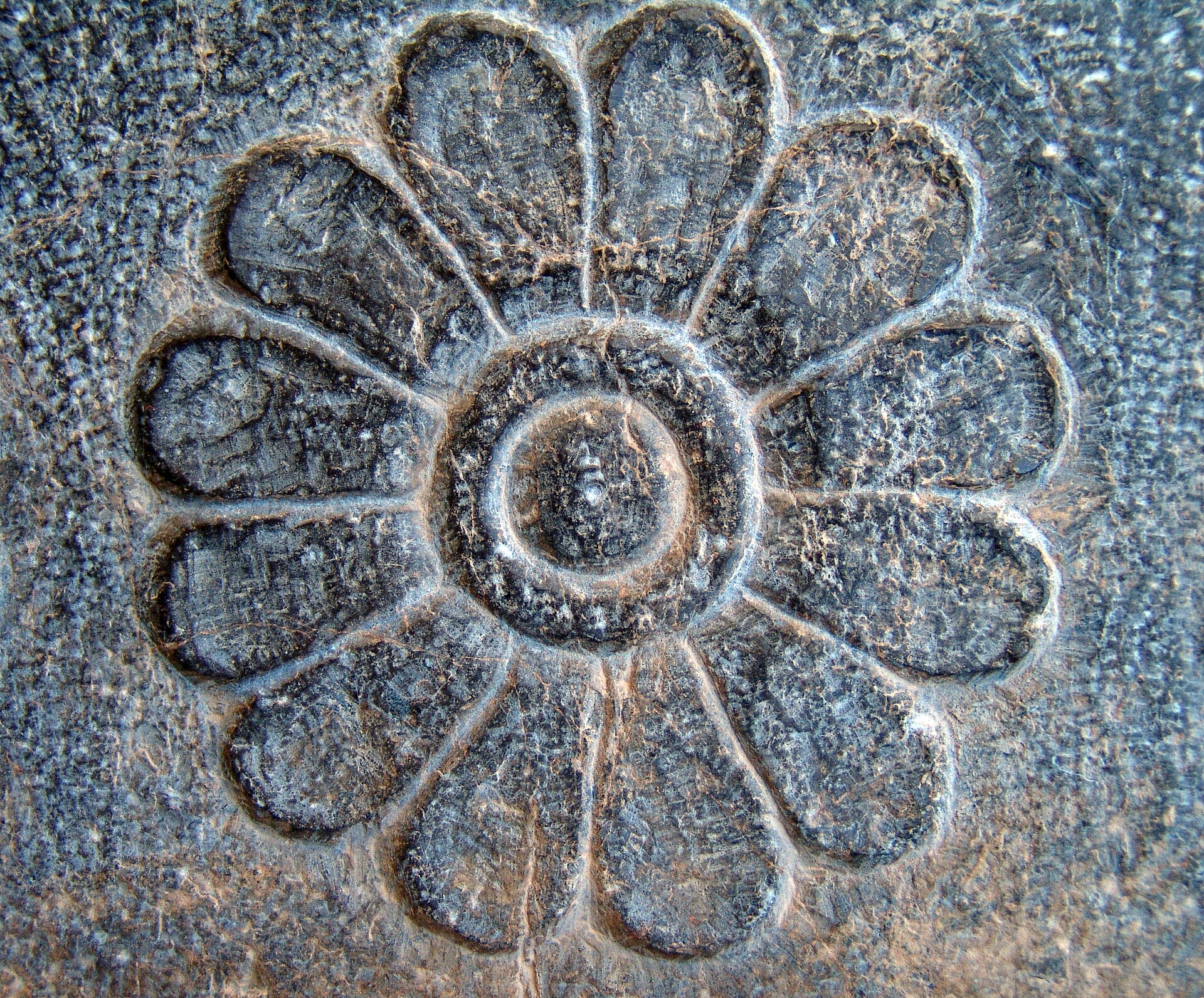
Look closely at the reliefs and lotus flowers are everywhere: carried in the hands of the king and his nobles, and repeated as twelve-petalled rosettes framing the stairways. For the Achaemenids the lotus stood for life and renewal. It is the same rosette that inspired the plan of Pardis, its districts unfolding like petals around a central plaza.