Where the empire began
Cyrus the Great built Pasargadae near the place where, around 550 BC, he defeated the Median king Astyages and united the Medes and Persians. It was the first capital of the Achaemenid Empire, which under Cyrus grew to stretch from the Aegean to Central Asia. Cyrus is remembered across the world for his tolerance; the clay cylinder recording his conquest of Babylon, now in the British Museum, describes him returning displaced peoples and their gods to their homes.
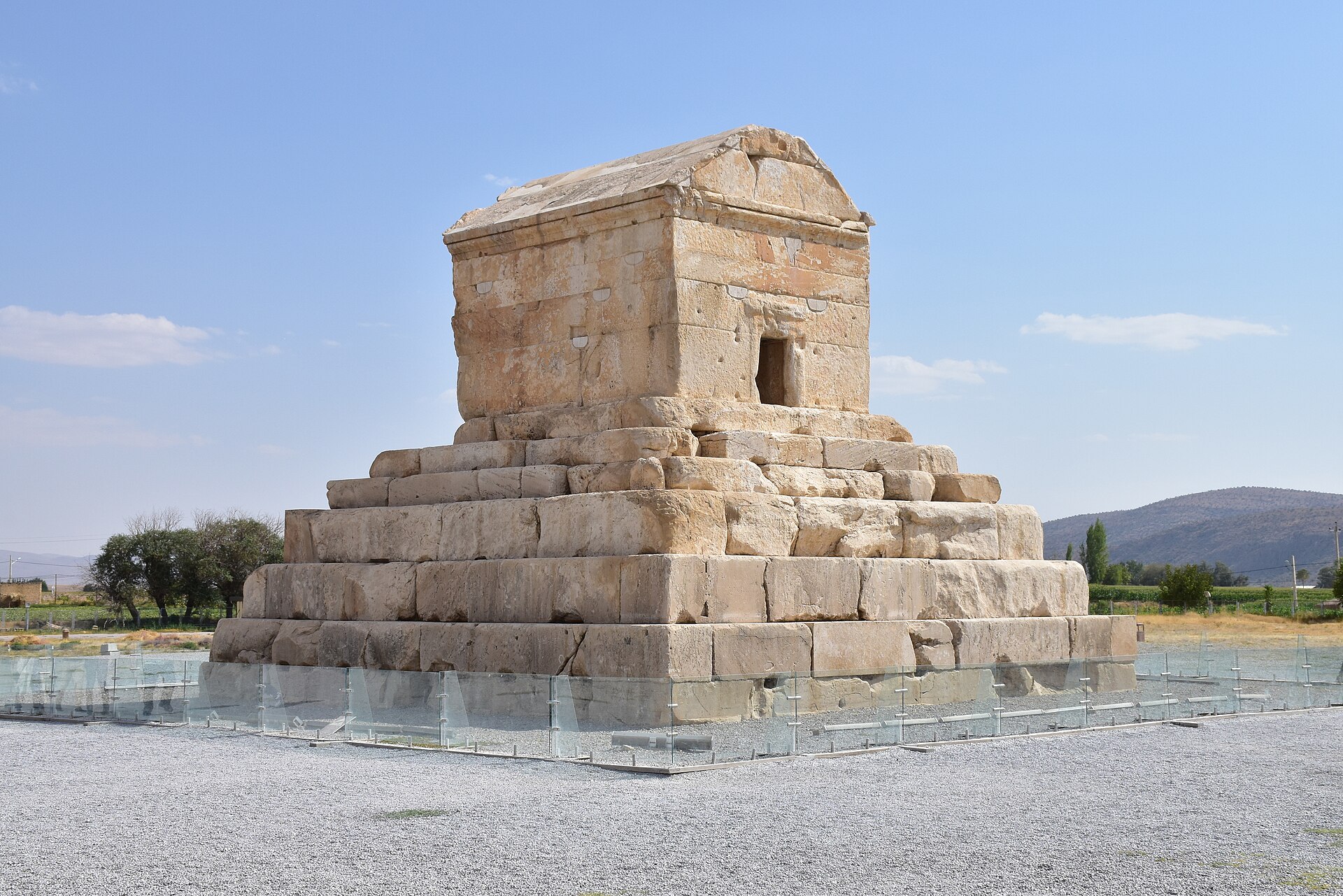
The Tomb of Cyrus
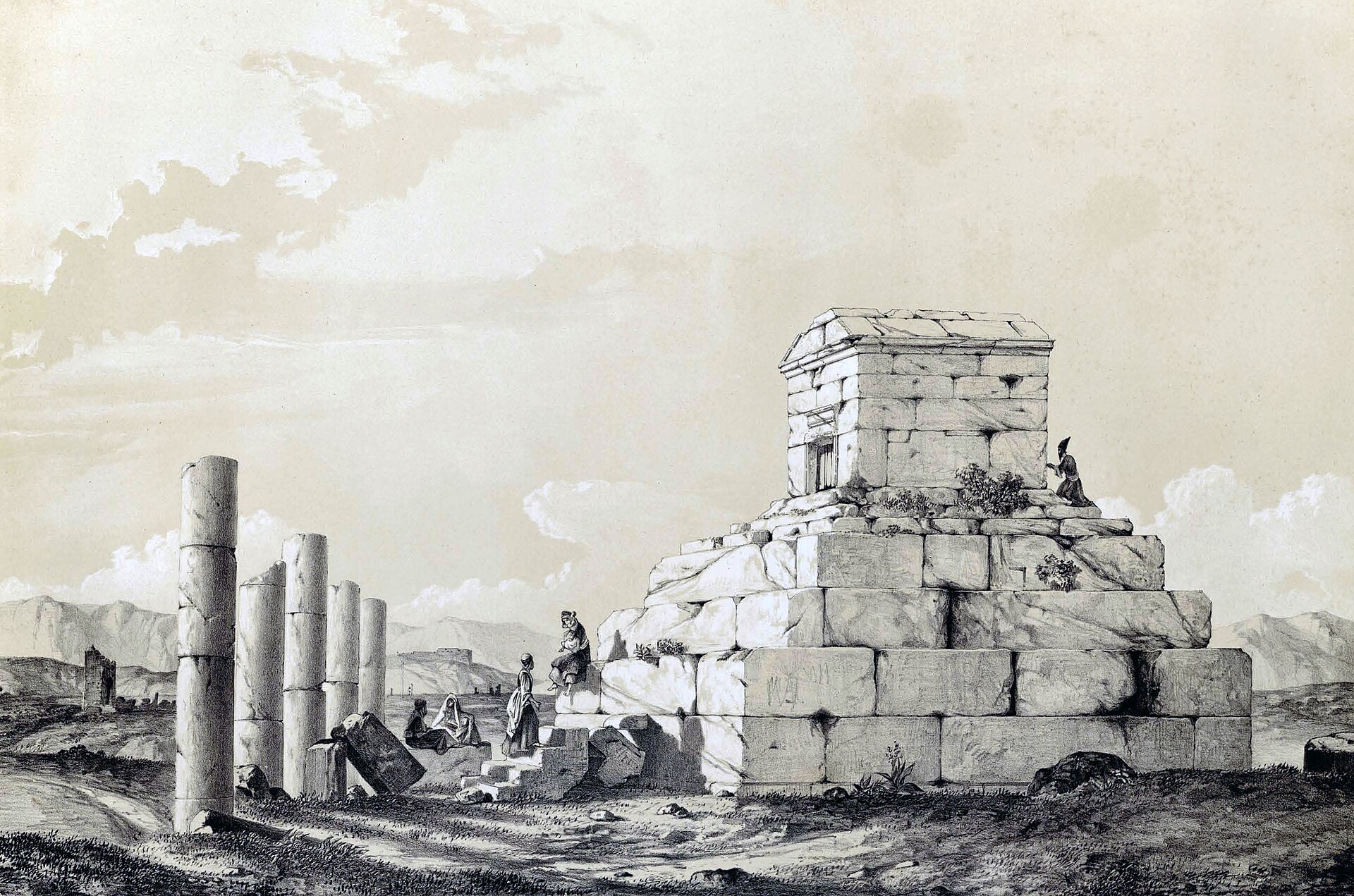
The tomb is a small gabled stone chamber raised on six great steps, simple and solemn on the open plain. For centuries locals called it the Tomb of the Mother of Solomon, which helped protect it. Greek historians record that Alexander the Great visited it, found it plundered, and ordered it restored. Arrian writes that inside lay a golden couch and a golden coffin.
The first Persian garden
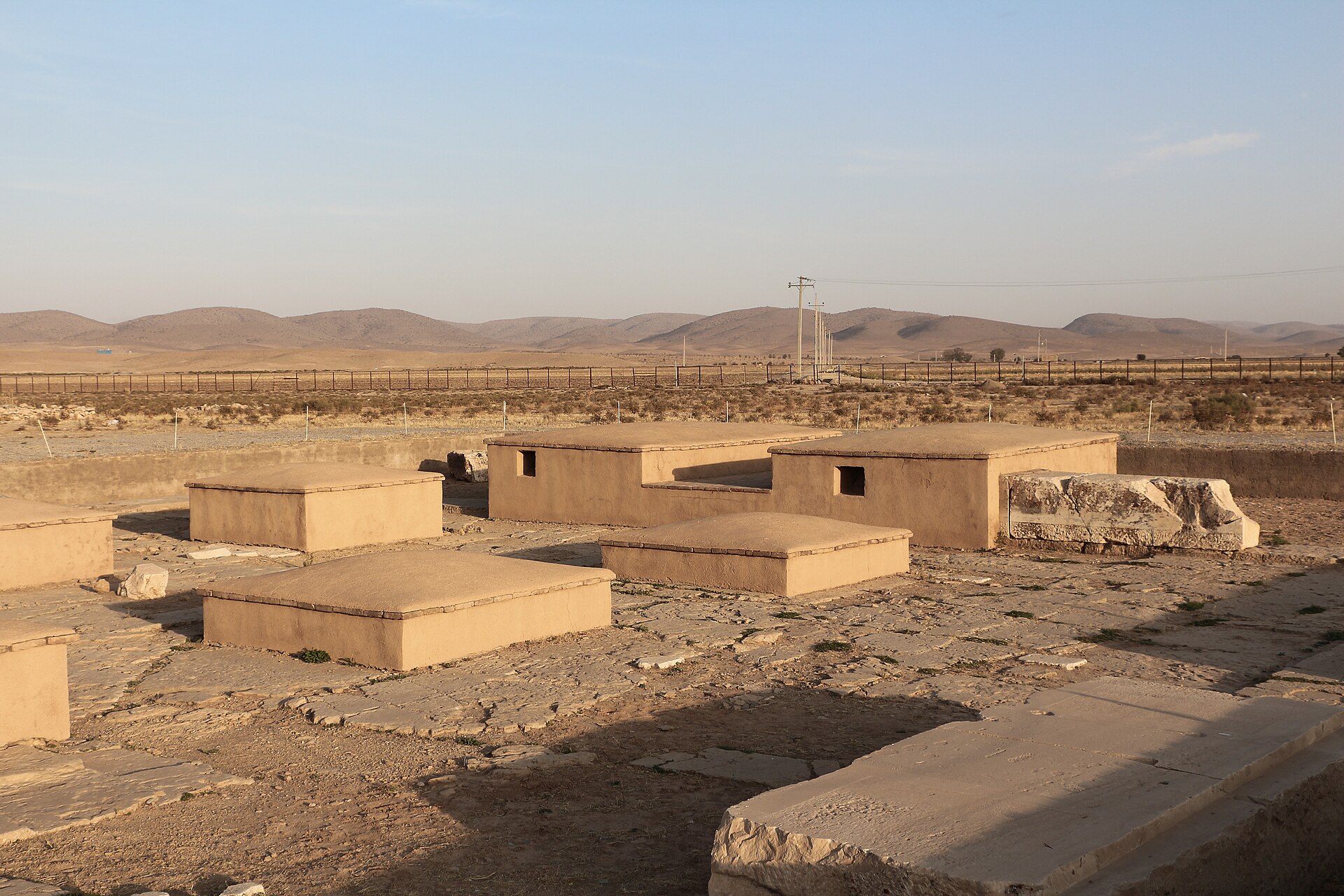
Between the palaces, archaeologists traced stone water channels laid out in a geometric plan. They are the earliest known example of the chahar bagh, the fourfold Persian garden, and the ancestor of every garden from Isfahan to the Alhambra and the Taj Mahal. The word for such a walled garden, pardis, passed through Greek into English as paradise.
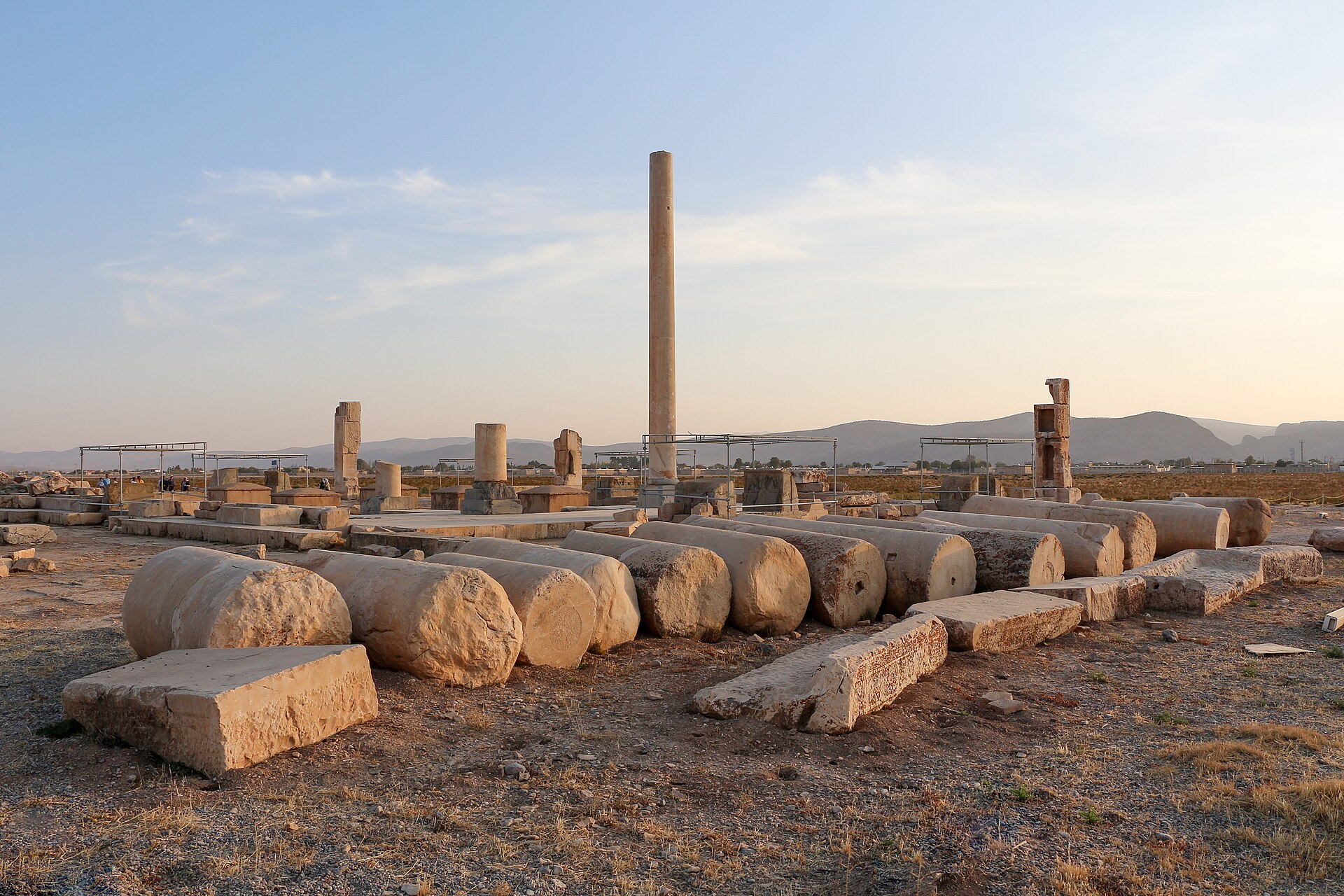
The site also holds the Gateway, Audience and Private palaces, and the Tall-e Takht citadel on the hill above. One of its most famous carvings is a four-winged figure on a doorway jamb, sometimes thought to represent Cyrus himself.