The prince of physicians
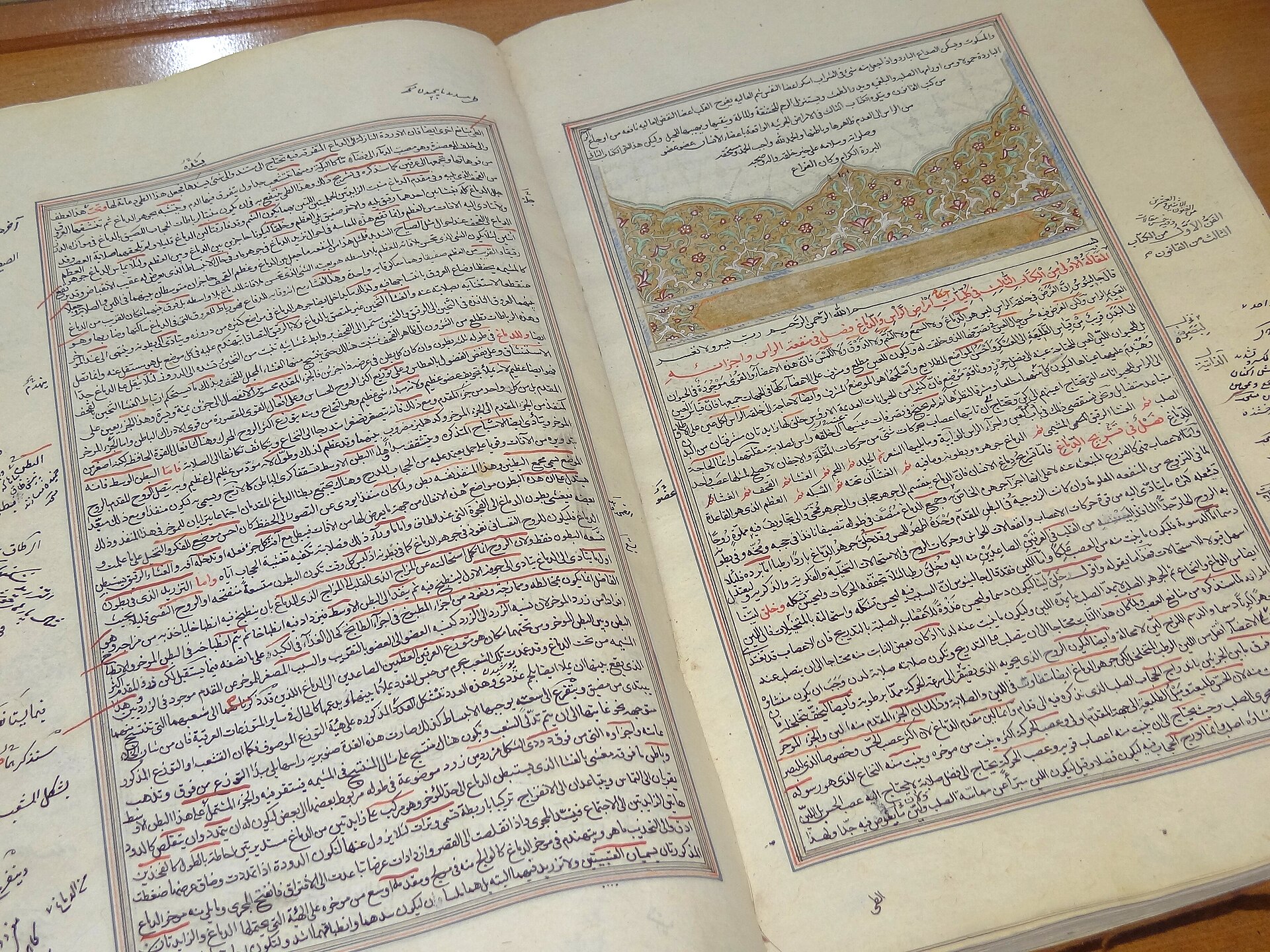
Abu Ali Sina, known in the West as Avicenna, was born near Bukhara in 980 and was a practising physician by the age of eighteen. He wrote hundreds of works on medicine, philosophy, astronomy and music. His Canon of Medicine became the standard medical textbook of the Islamic world and of European universities into the 1600s. He served the ruler of Hamedan as physician and vizier, later lived for years in Isfahan, and died in Hamedan in 1037 while travelling with the court.
A modern monument
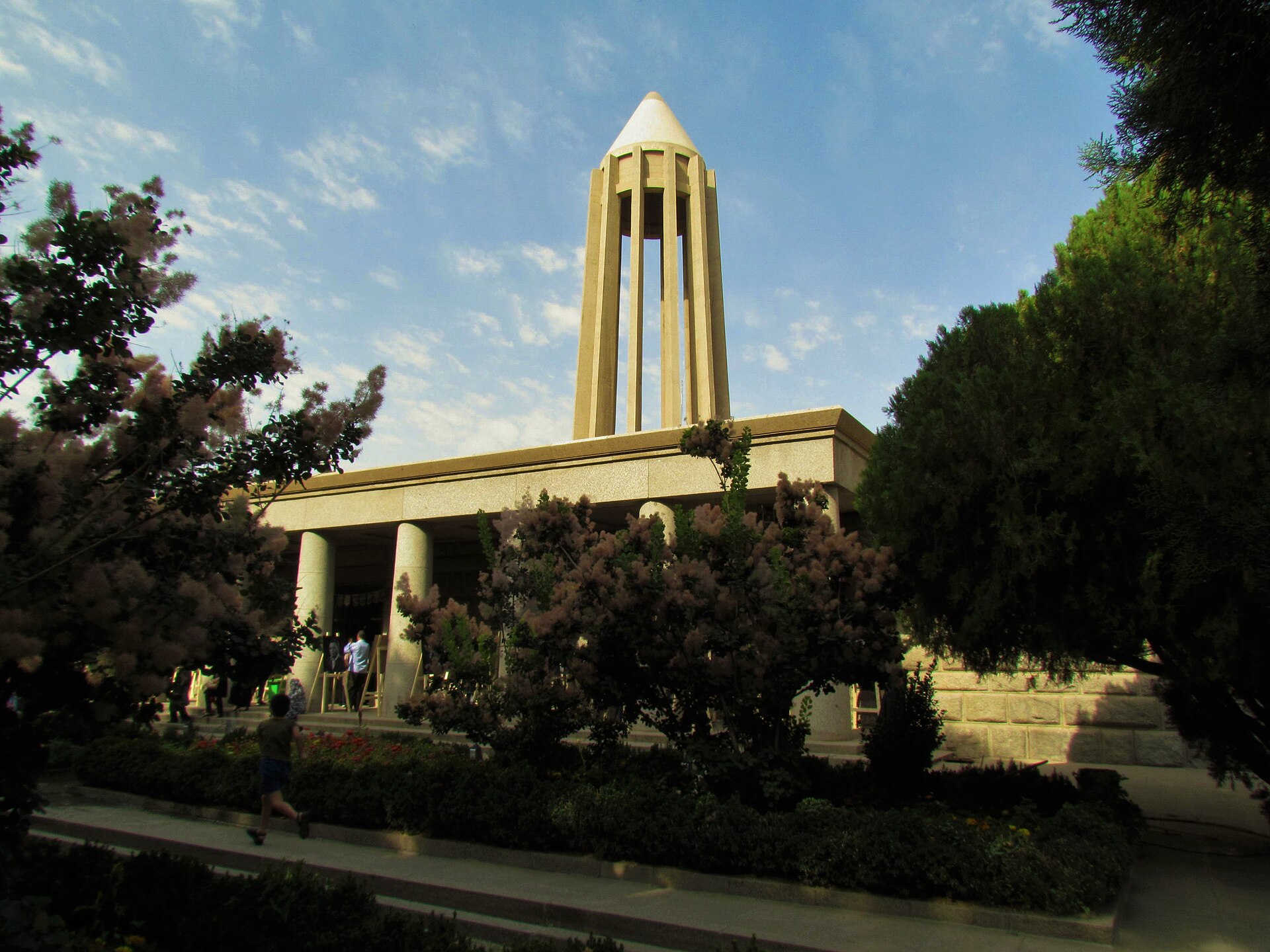
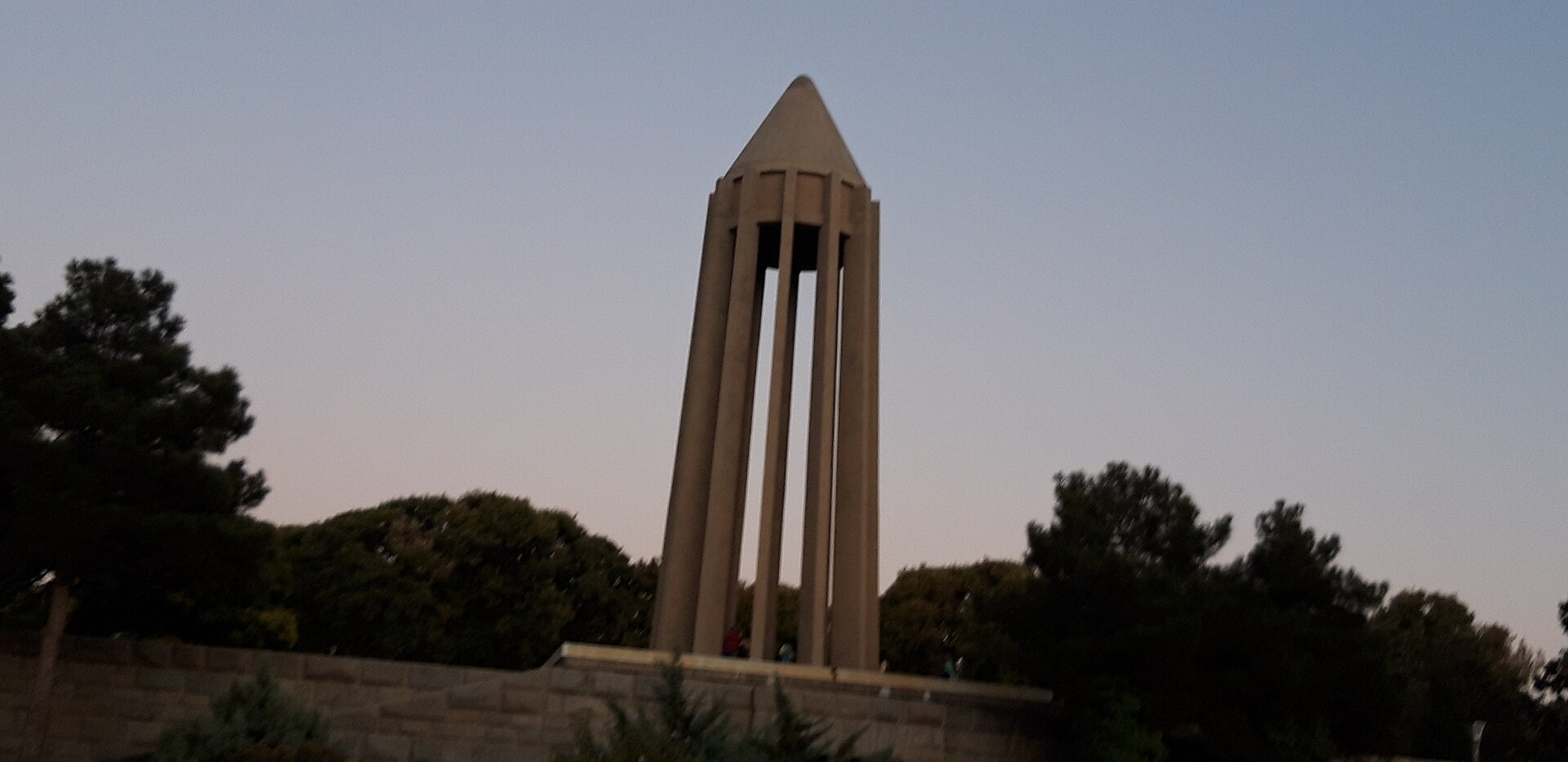
The present mausoleum was designed by the architect Houshang Seyhoun and dedicated in 1954, a thousand years after Avicenna’s birth by the lunar calendar. Its slender tower, ringed by columns, is a modern reinterpretation of the 11th-century tomb tower of Gonbad-e Kavus. Inside are a museum of ancient objects found in and around Hamedan and a library of Avicenna’s works. The square around it is still the centre of the city, and in Iran his birthday is celebrated as National Doctors’ Day.