A palace in a garden
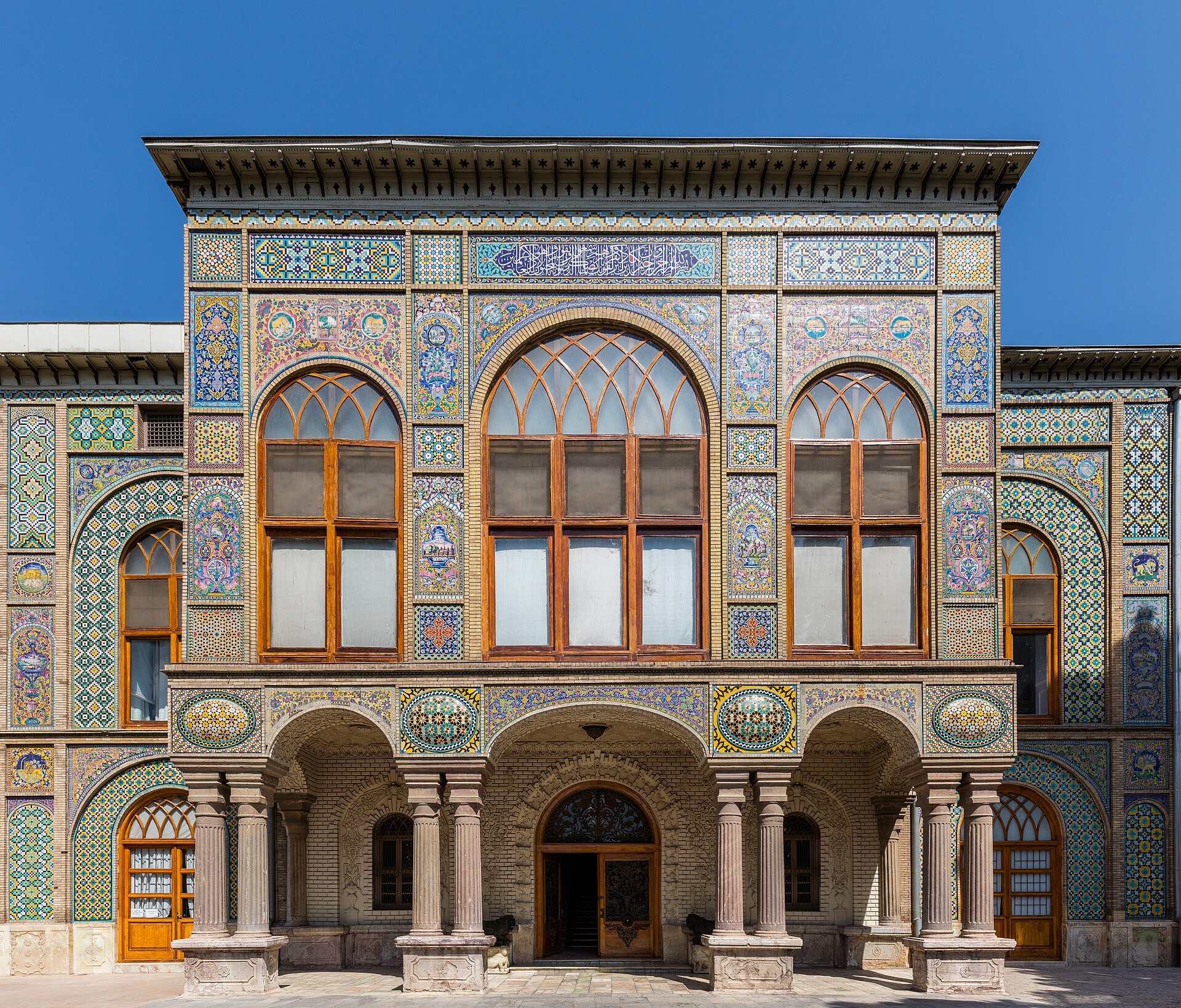
Golestan means “rose garden.” The palace grew out of the old citadel of Tehran, which became the capital when the Qajar dynasty chose it in the late 1700s. Its rulers, above all Fath-Ali Shah and Naser al-Din Shah, turned the citadel into a walled garden of pavilions, pools and courtyards in the middle of the city.
What to see
The Marble Throne (Takht-e Marmar), completed in 1806, is a platform of carved yellow marble held up by figures, set in an open porch before a garden pool.
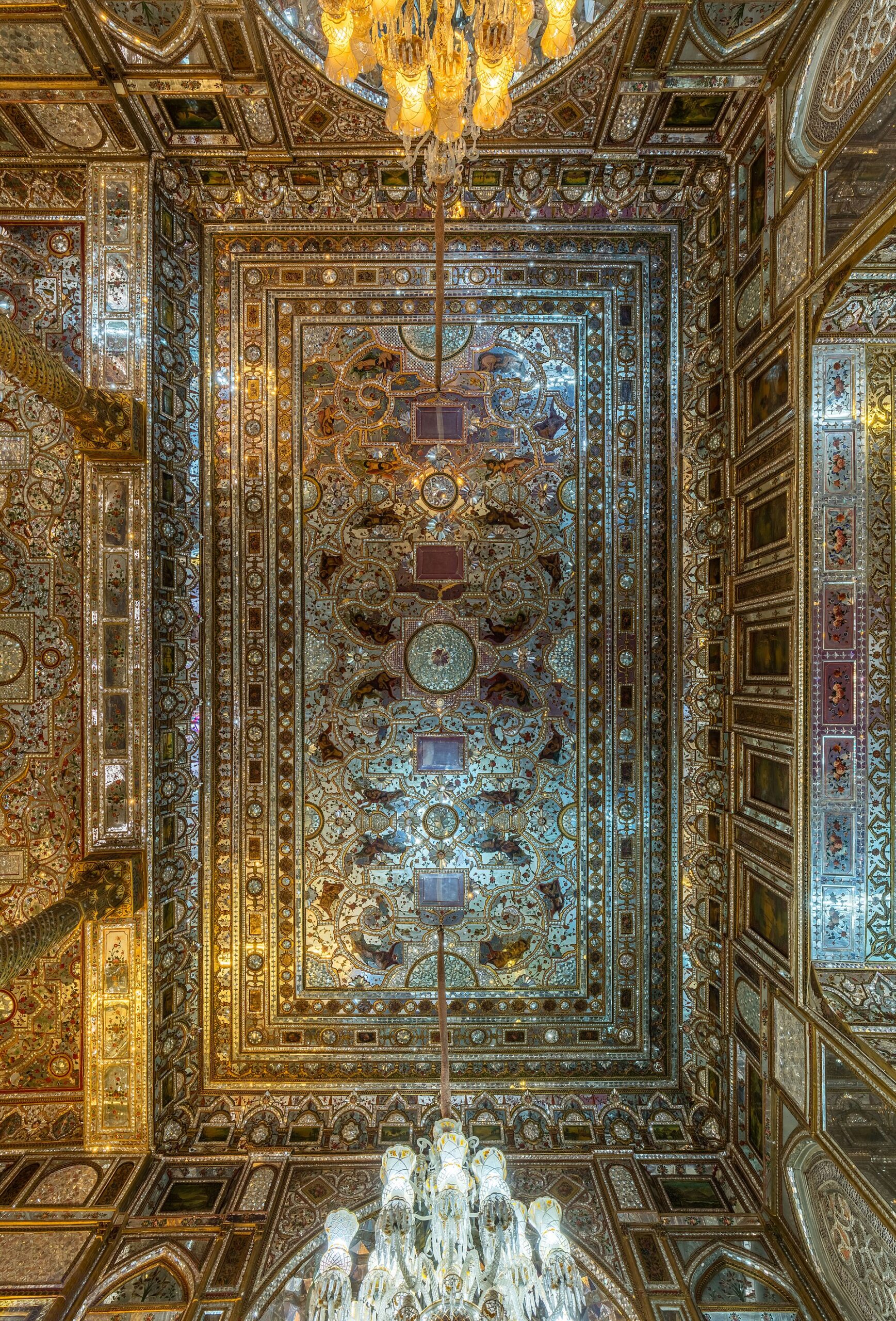
The Hall of Mirrors is covered in thousands of tiny pieces of mirror that scatter the light across the walls and ceiling.
Shams-ol-Emareh, “the Building of the Sun,” built in the 1860s, was one of the tallest buildings in Tehran in its day. Its two towers look out over the city.
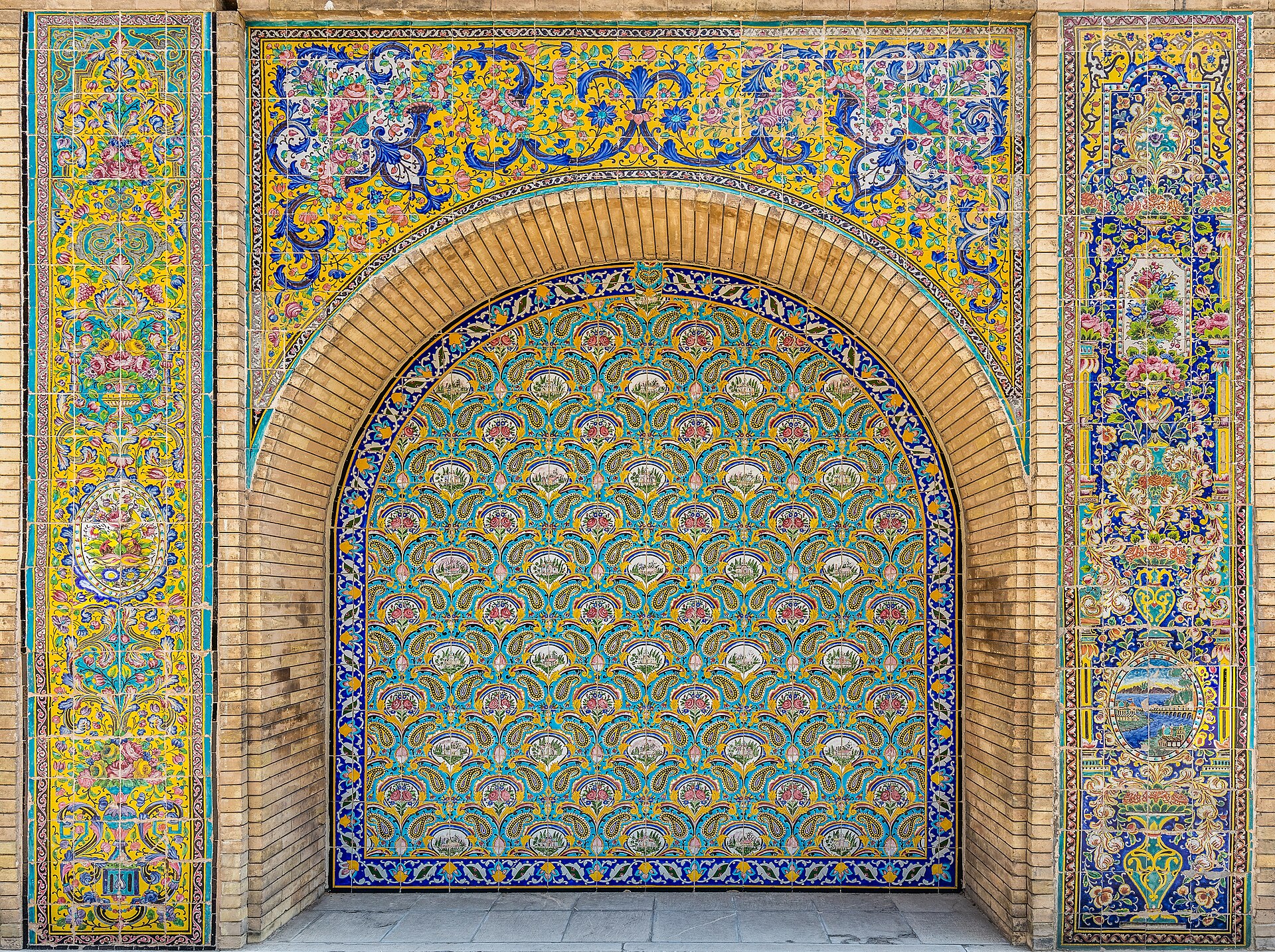
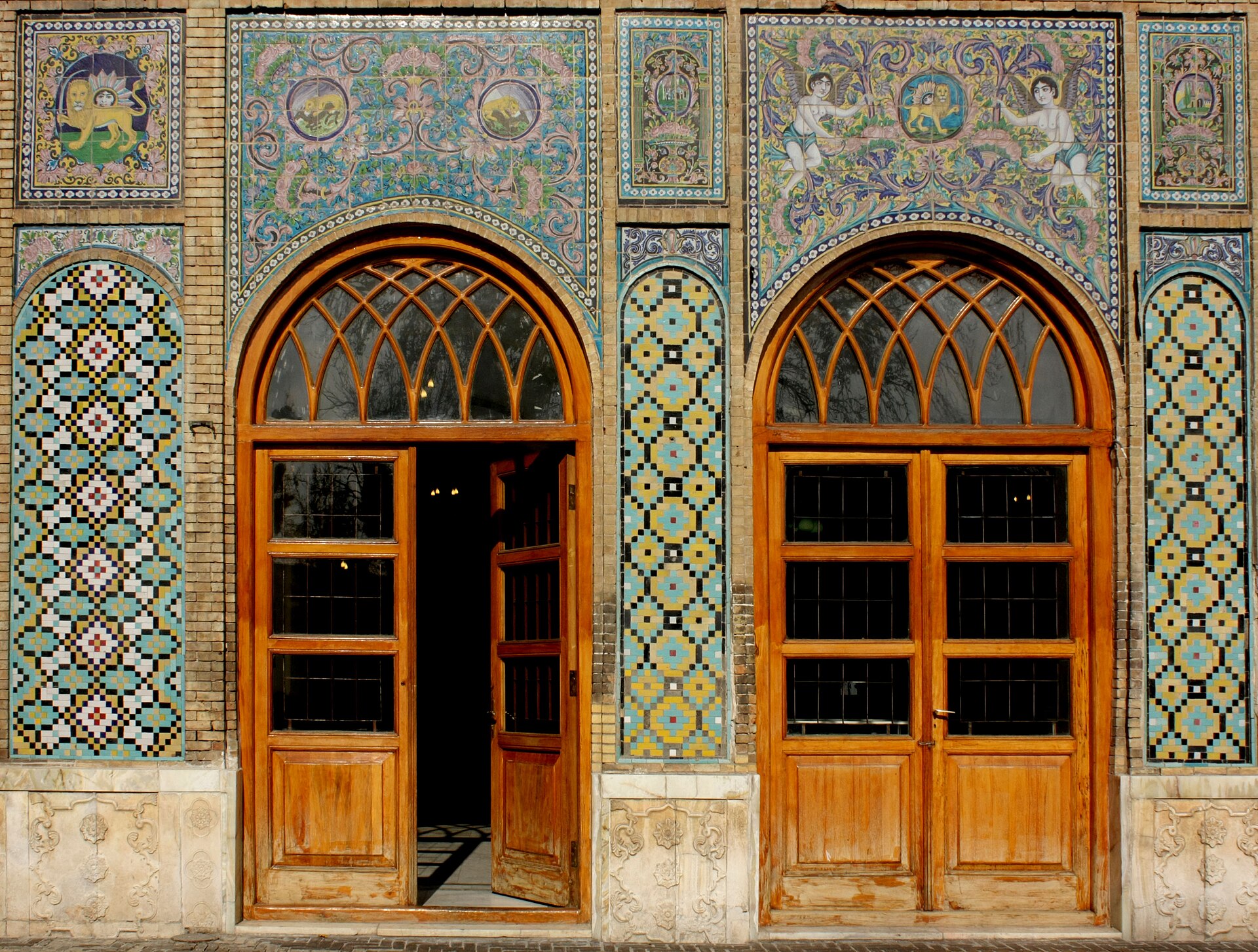
In the palace you can also find tile panels with scenes of flowers, birds and people, the work of the court artists of the time, who mixed Persian tradition with ideas from Europe.