The cliff of kings
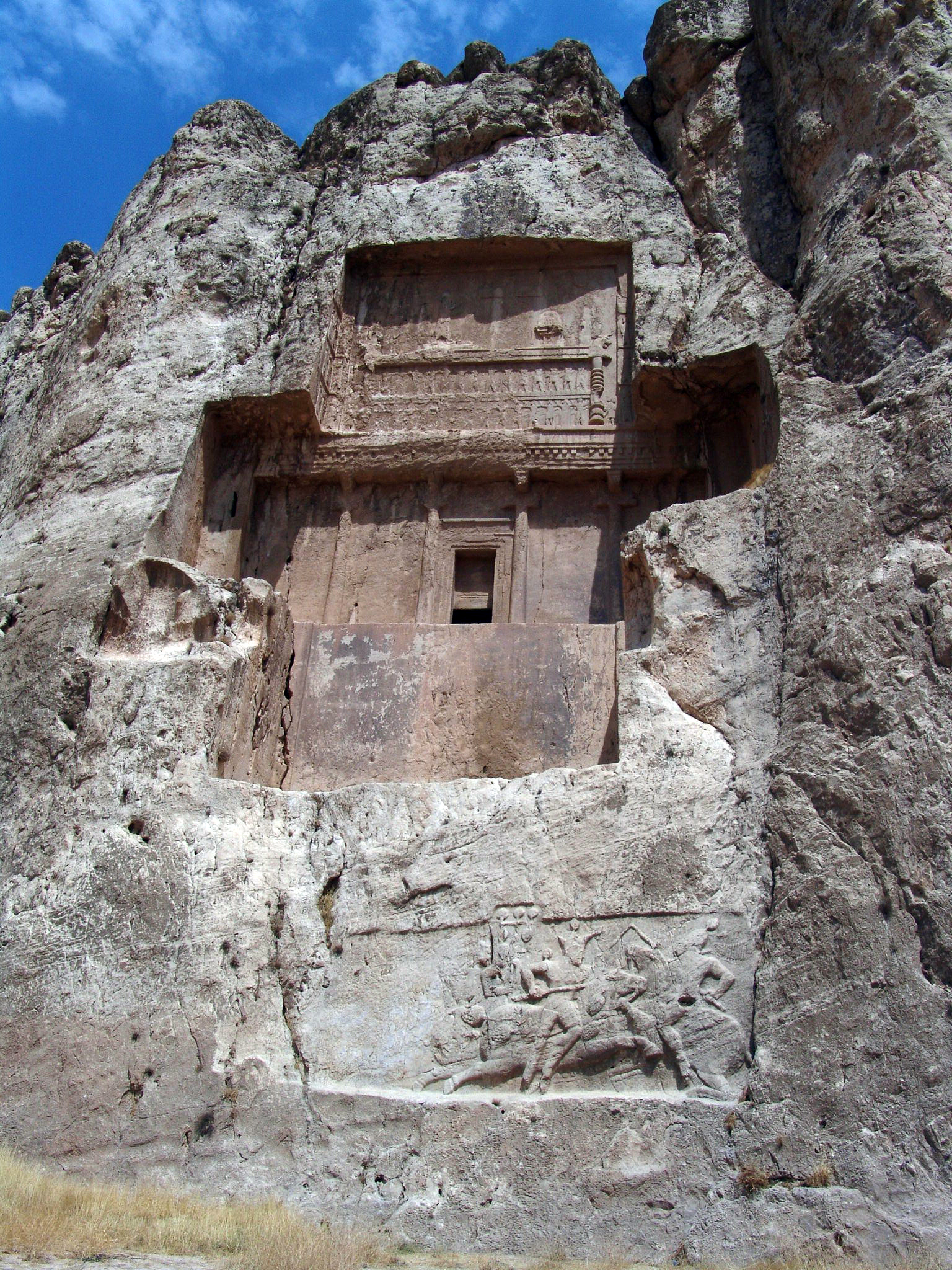
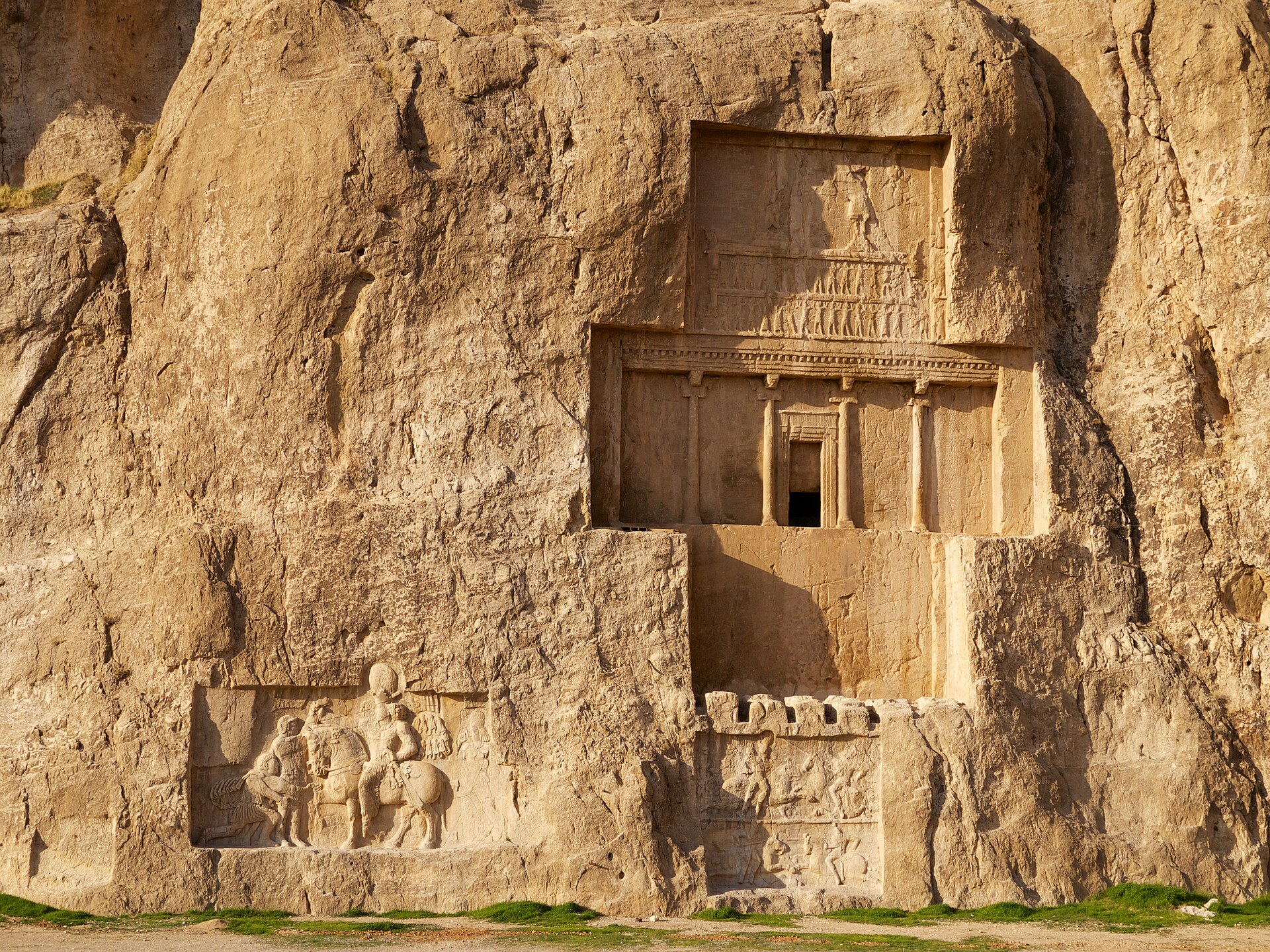
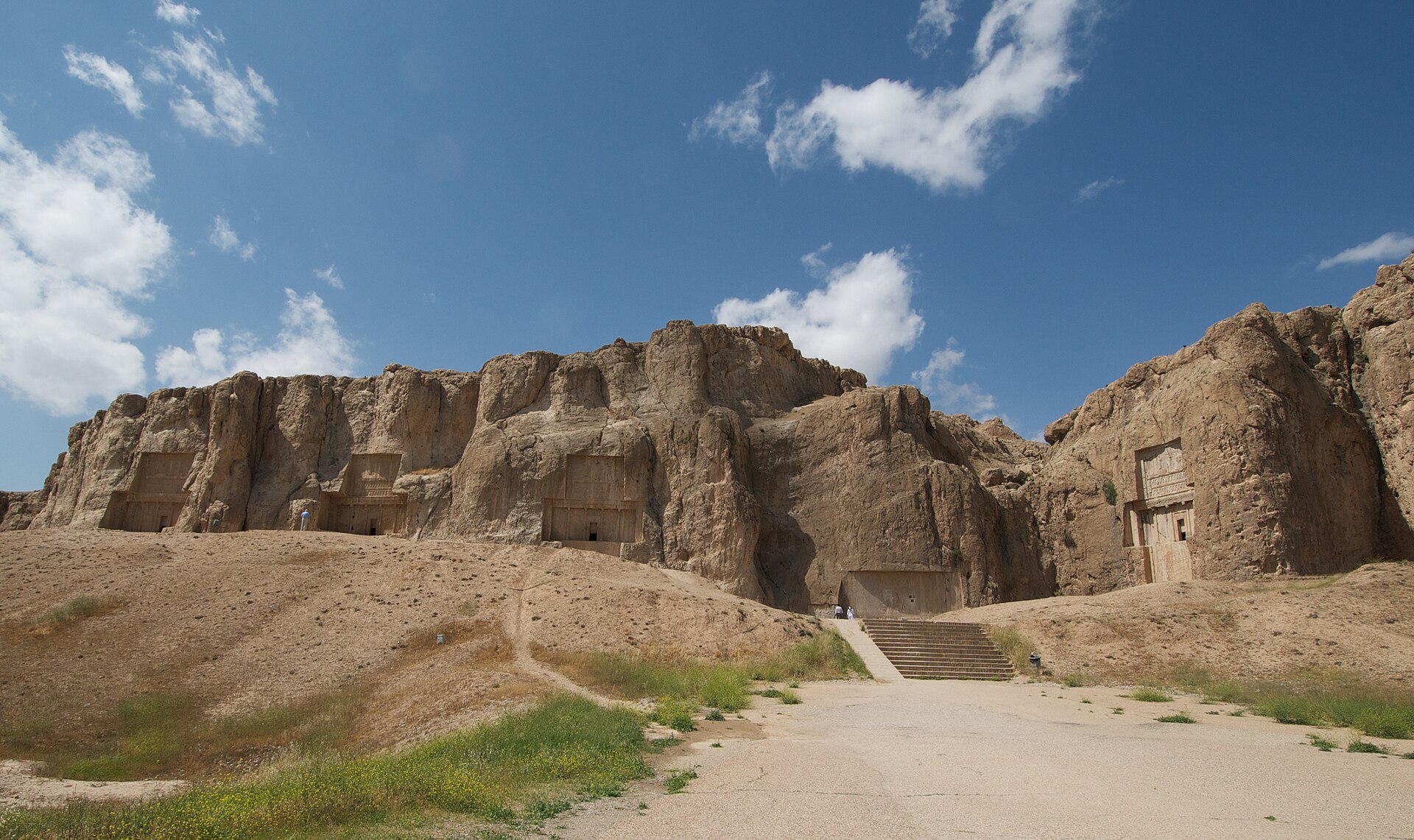
Just a few kilometres from Persepolis, a tall rock face rises from the plain. Cut into it, high above the ground, are four tombs with great cross-shaped facades. By tradition they belong to Achaemenid kings. An inscription identifies the tomb at the far left as that of Darius the Great, and the others are traditionally ascribed to Xerxes, Artaxerxes I and Darius II. At the centre of each cross, a doorway leads to a chamber carved deep into the stone.
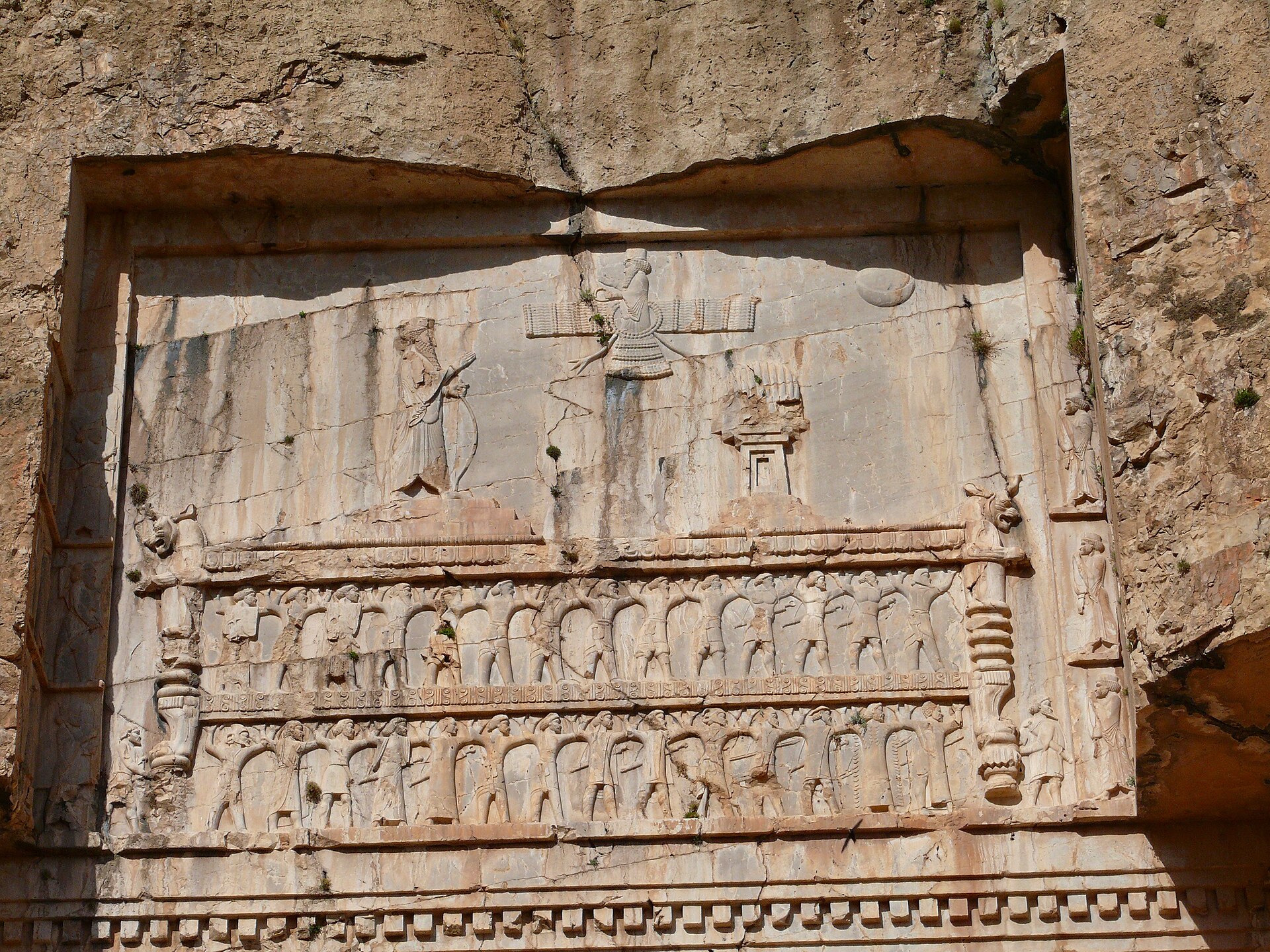
In the upper panel of each tomb, figures hold up a platform in which the king stands before a fire altar, under the winged symbol of Ahura Mazda.
Why it is called Rustam
Later generations of Iranians did not know who had carved the cliff. Seeing the great figures of warriors and horsemen below the tombs, they assumed it showed the hero Rostam of the Shahnameh, and the place became Naqsh-e Rustam, the “Picture of Rustam.”
Carvings from later kings
Centuries after the Achaemenids, kings of the Sasanian dynasty added their own reliefs at the foot of the cliff. One of the best known shows Shapur I on horseback, with a Roman emperor kneeling before him and another held by the hand, a record of his victories over Rome in the 3rd century AD.
In front of the cliff stands the Ka’ba-ye Zartosht, a square stone tower from the Achaemenid period whose original purpose is still debated.