From chaturanga to shatranj
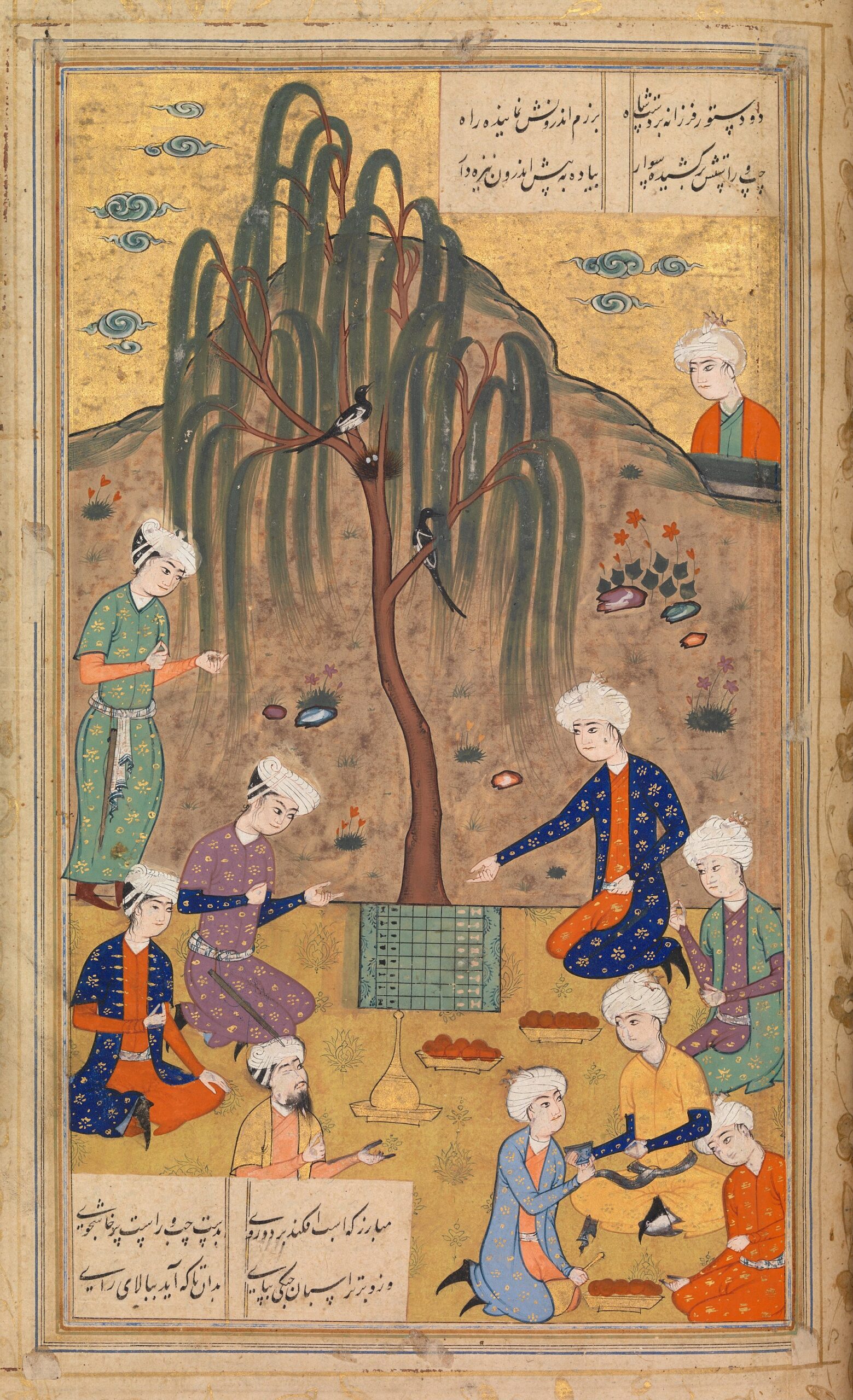
Chess grew out of an Indian game called chaturanga. It reached Sasanian Persia, where it was called chatrang, and Persian players gave it the terms we still use. The king was the shah, and a king who could not escape was shah mat, which became “checkmate.”
In Persian shatranj the pieces moved a little differently. The queen, the ferz, was a counselor who stepped one square diagonally, and the bishop, the pil or elephant, jumped two squares. After the Islamic conquest of Persia the game travelled west, through Spain and the rest of Europe, where it slowly became modern chess.
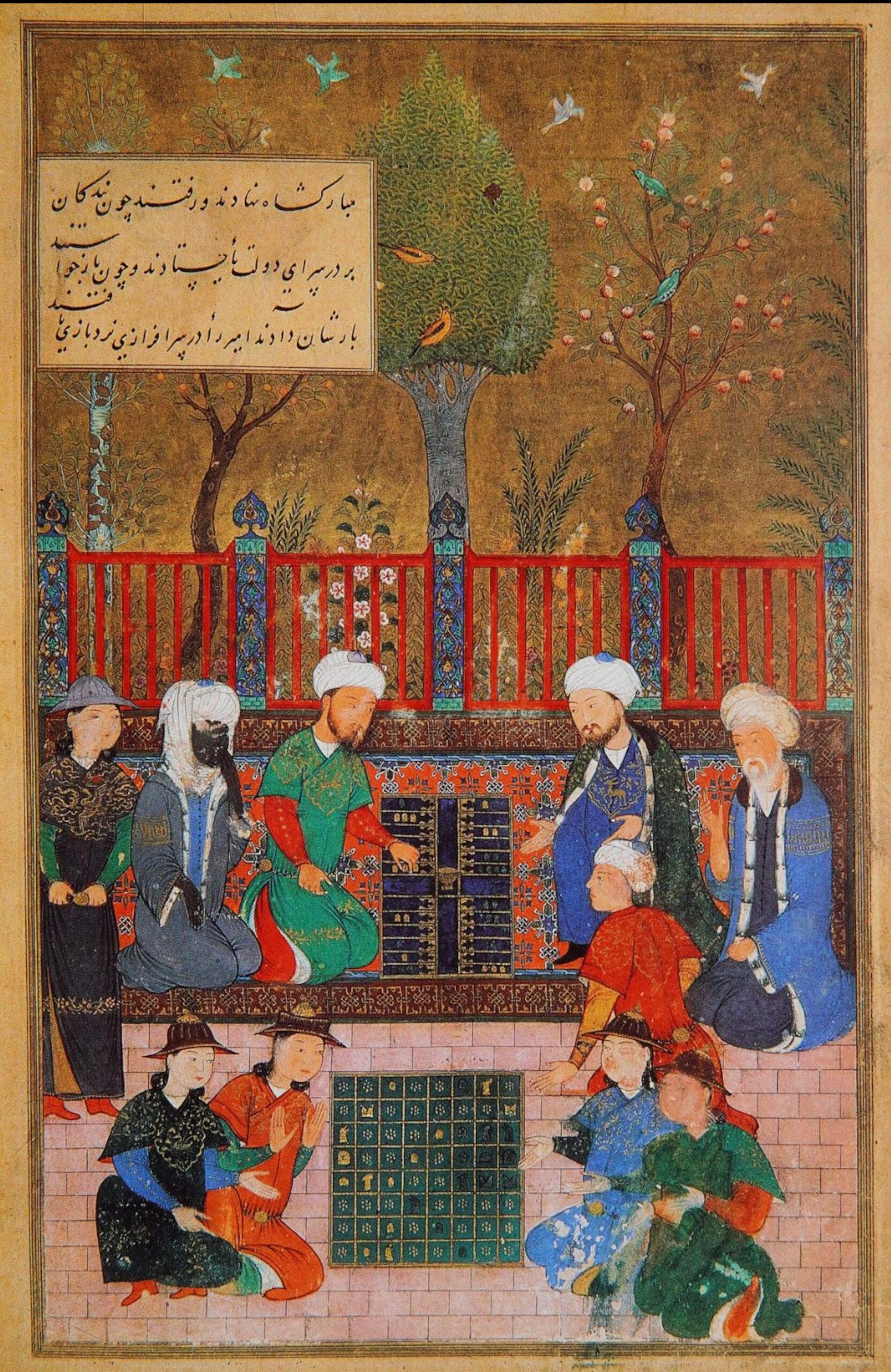
The wise man and the board
The Shahnameh tells how an Indian ruler sent a chess set to the court of the Sasanian king Khosrow I, with a challenge: if the Persians could not work out the game, they would have to pay tribute. The king’s minister, the sage Bozorgmehr, solved it, and then invented a game of his own to send back, nard, which the Indian scholars could not solve.
Takhteh nard
Nard is a race game for two. Each side has fifteen men and moves them around 24 points on a hinged wooden board, according to the throw of two dice. It is one of the ancestors of backgammon, and a Middle Persian name for it, nēw-ardaxšīr, links it to Ardashir, the founder of the Sasanian dynasty.
Today takhteh, “board,” is the usual name in Iran, and the click of dice and counters is part of the sound of tea houses and living rooms. A round of takhteh nard on a family visit is a good test of trash talk.