The rice
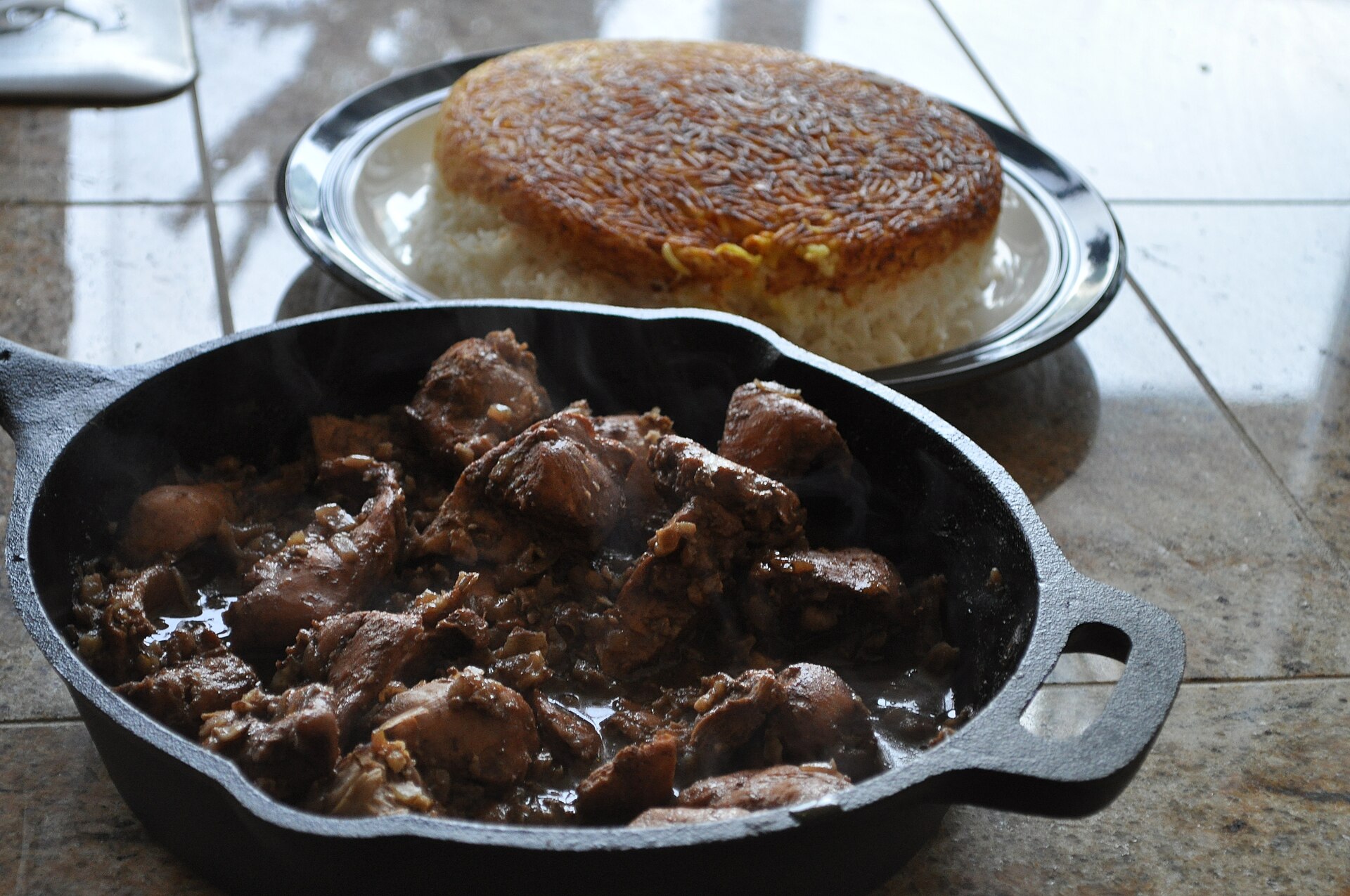
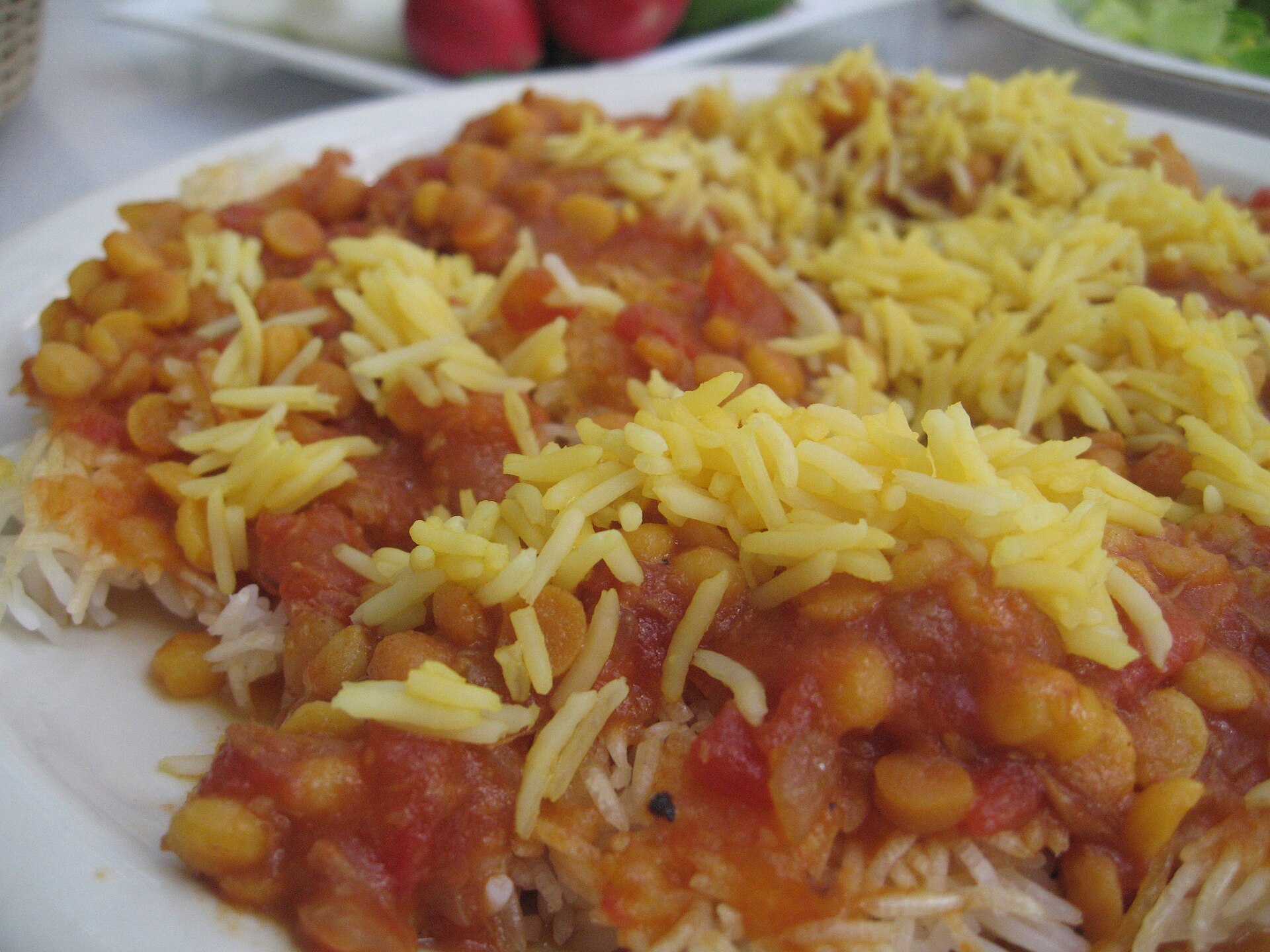
The centerpiece of a Persian meal is rice, steamed so that every grain stays separate. Plain rice is chelow, rice mixed with herbs, nuts or fruit is polow, and at the bottom of the pot forms the tahdig, a crispy golden crust that everyone fights over. Chelow kebab, rice with grilled meat, is often called Iran’s national dish.
Stews and soups
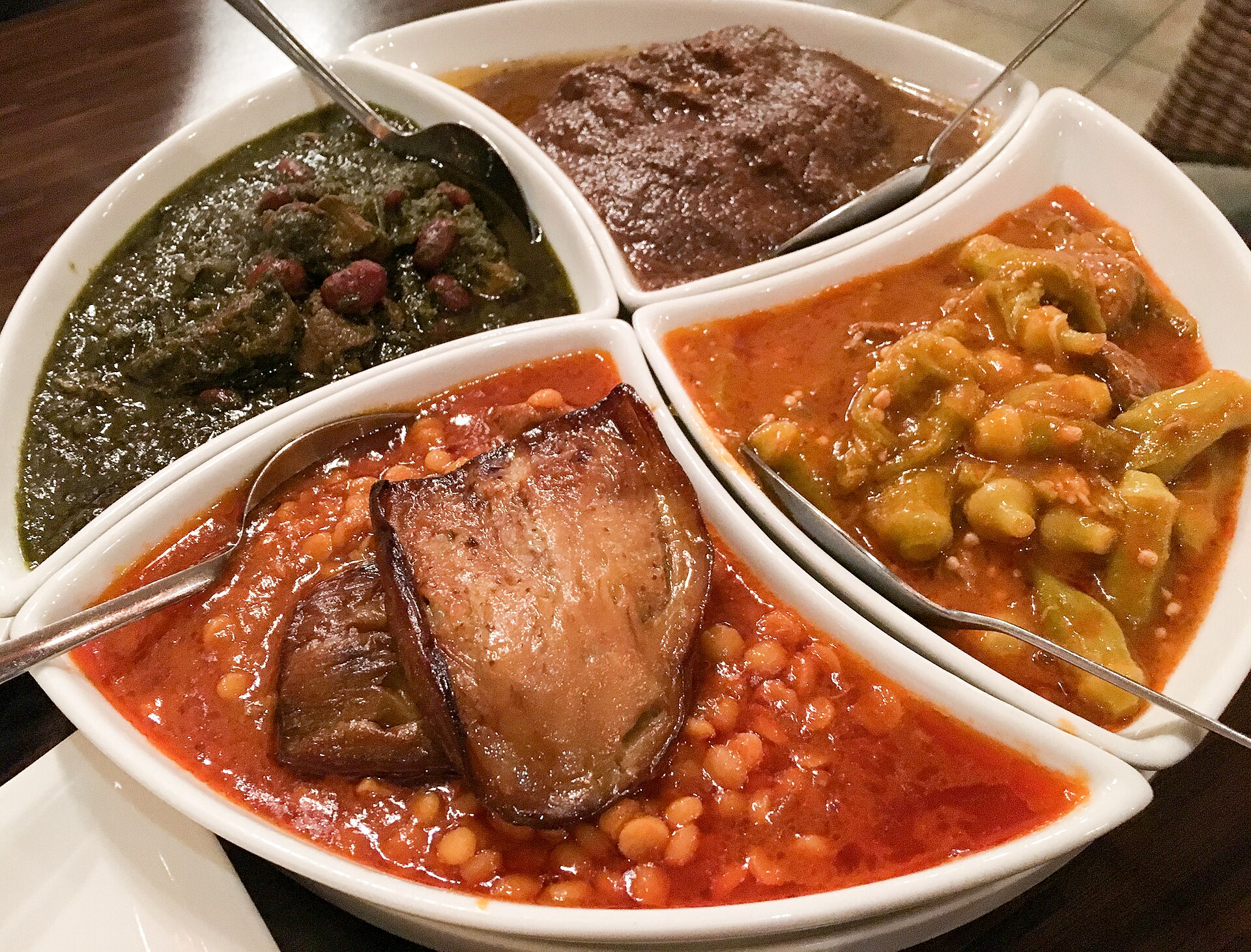
A khoresh is a slow stew served over rice. Ghormeh sabzi is a deep green stew of parsley, leek, coriander and fenugreek. Fesenjan is made with ground walnuts and pomegranate syrup, sweet, sour and rich. A thick ash, such as ash reshteh with noodles, is a favorite in cold weather and on festive days.
At the table
Meals are served on a sofreh, a cloth spread on a rug or table, with a plate of fresh herbs, radishes and bread, sabzi khordan, to go with almost everything, and yogurt in many forms: mast-o khiar, borani and doogh. Guests are served first and generously, and the host eats last. Then comes ta’arof, the polite back-and-forth of refusing and insisting before anyone accepts a second helping.
The flavors of the Persian kitchen traveled widely, influencing the cooking of the Caucasus, Turkey and Central Asia, and, through the Mughal court, the food of India. Cook a dish together in the Mehmooni group.